Table of Contents
As a manufacturer of ultrasonic smart water meters, we understand that buyers are not only looking for a product—they want reliable technology, long-term accuracy, low maintenance, and smart connectivity. This guide is designed to help water utilities, property managers, smart city developers, and industrial engineers understand ultrasonic smart water meter technology and make the right purchasing decision.
This article also covers related keywords such as IoT water metering, NB-IoT water meter, LoRaWAN smart water meter, remote reading water meter, AMI/AMR water metering, leak detection water meter, smart water management, and water consumption monitoring to improve SEO coverage and match more user search intents.
What Is an Ultrasonic Smart Water Meter? (Definition & Key Concepts)
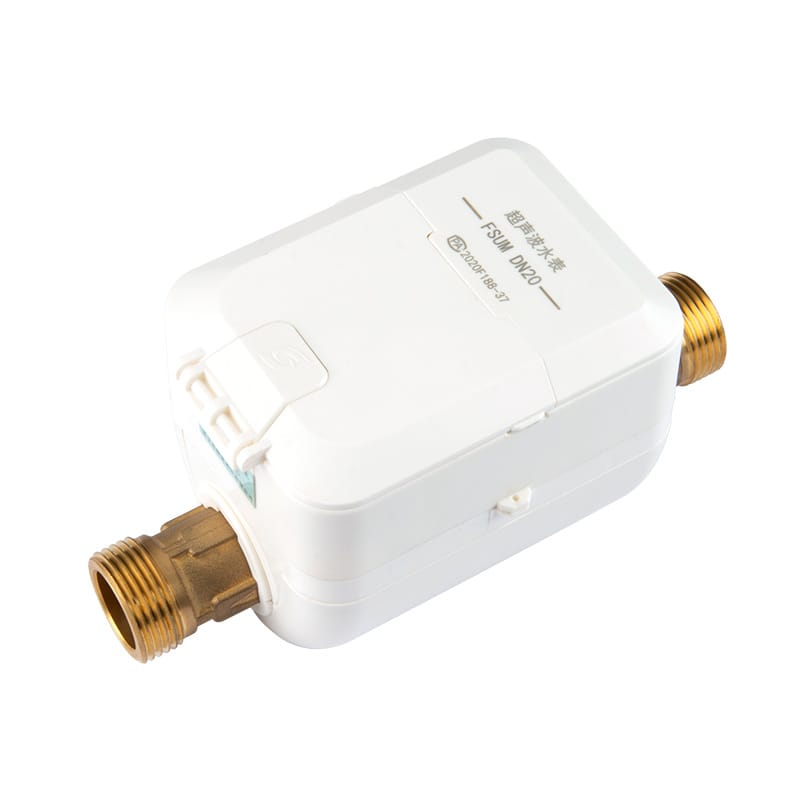
An ultrasonic smart water meter is a digital flow meter that measures water usage using ultrasonic waves. Unlike traditional mechanical meters that rely on moving parts such as turbines or pistons, ultrasonic smart water meters use non-contact ultrasonic sensing to deliver highly accurate flow measurement with minimal wear and tear.
A smart water meter integrates:
- Flow sensor module (ultrasonic transducers)
- Digital processing unit (MCU)
- Memory for data logging
- Communication module (NB-IoT, LoRaWAN, RF, M-Bus)
- Battery or external power supply
This combination enables remote reading, automatic meter reading (AMR), and advanced metering infrastructure (AMI)—critical components in smart water management systems.
Key Advantages of ultrasonic technology:
- No moving parts (reduces mechanical failure)
- High accuracy and stability
- Wide flow range and low minimum flow detection
- Easy integration with IoT platforms
How Does an Ultrasonic Smart Water Meter Work? (Technology Explained)
Transit-Time Ultrasonic Measurement
Most ultrasonic smart water meters use transit-time technology. Two ultrasonic transducers send pulses upstream and downstream. The meter calculates the difference in transit time, which is proportional to flow velocity.
Doppler Ultrasonic Measurement
Some meters use Doppler technology, suitable for water containing particles. However, for clean water supply, transit-time technology remains the most accurate and widely adopted.
Data Processing & Communication
Ultrasonic signals are converted into digital data, processed by the MCU, and stored in internal memory. Then, the meter sends data via:
- NB-IoT (narrowband IoT)
- LoRaWAN
- RF
- M-Bus
This enables remote reading and real-time monitoring, essential for modern water utilities and smart buildings.
Key Benefits of Using Ultrasonic Smart Water Meters
High Accuracy and Stable Performance
Ultrasonic smart water meters deliver accuracy levels that often meet ISO 4064 and OIML R49 standards. They maintain accuracy over time because they don’t rely on mechanical parts.
Low Maintenance and Long Lifespan
Without moving parts, ultrasonic meters are more durable. This reduces maintenance costs and downtime, which is crucial for large-scale deployments in smart city water networks.
Leak Detection and Water Loss Control
Smart water meters can detect irregular flow patterns and send alerts to the cloud platform. Early leak detection reduces water loss and supports sustainable water management.
Remote Reading and Automatic Billing
Ultrasonic smart water meters enable remote meter reading through IoT connectivity. This supports automatic billing and eliminates manual meter reading errors.
Smart City and IoT Integration
Ultrasonic smart water meters can connect to IoT platforms, enabling centralized data management and analytics. This supports smart city initiatives, including water conservation and resource planning.
Ultrasonic Smart Water Meter vs Other Meter Types (Comparison)
| Meter Type | Accuracy | Maintenance | Cost | Best Use Case | Smart Features |
|---|---|---|---|---|---|
| Ultrasonic Smart Water Meter | High | Low | Medium | Residential, commercial, industrial | Remote reading, leak detection, IoT |
| Mechanical Water Meter | Medium | High | Low | Simple applications | Limited |
| Electromagnetic Water Meter | High | Medium | High | Industrial, municipal | Can be integrated with IoT |
| Turbine Water Meter | Medium | Medium | Medium | Industrial | Limited |
Ultrasonic vs Mechanical Water Meter
Mechanical meters are cost-effective but prone to wear and inaccurate readings over time. Ultrasonic meters maintain long-term accuracy and require less maintenance.
Ultrasonic vs Electromagnetic Water Meter
Electromagnetic meters are accurate and ideal for industrial systems. However, they usually require a stable power supply. Ultrasonic meters can run on batteries and are easier to deploy in distributed networks.
Ultrasonic vs Turbine Water Meter
Turbine meters are sensitive to water quality and require regular maintenance. Ultrasonic meters are more stable and suitable for long-term monitoring.
How to Choose the Right Ultrasonic Smart Water Meter (Buyer’s Guide)
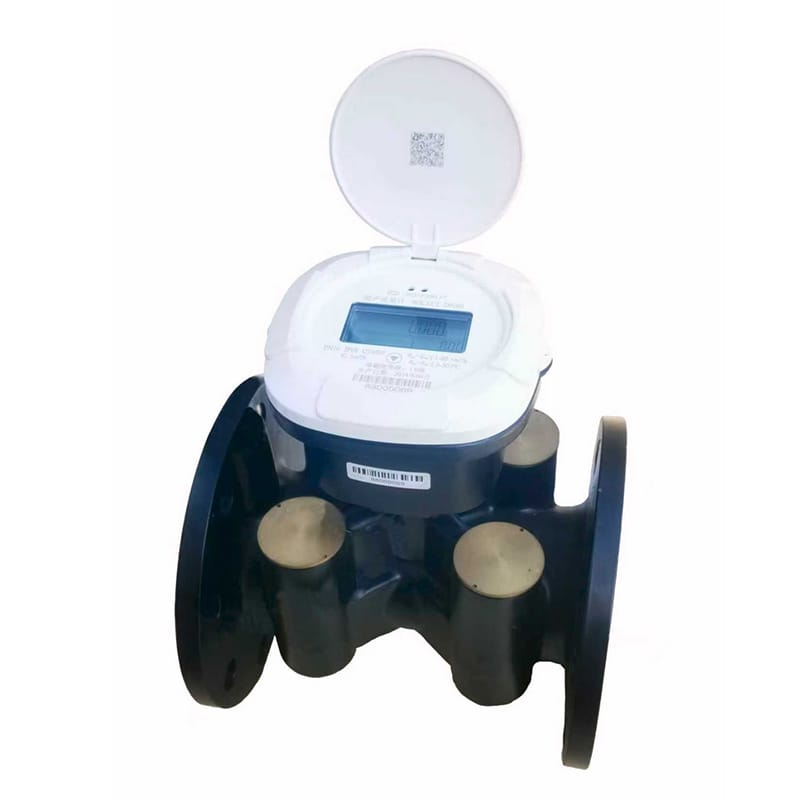
Application-Based Selection
Residential and submetering: Choose compact ultrasonic meters with long battery life and strong anti-tamper features.
Commercial buildings: Focus on accuracy, leak detection, and remote reading.
Industrial systems: Require high pressure rating and robust communication modules.
Key Specifications to Check
- Accuracy class (ISO/OIML)
- Flow range (Qmin/Qmax)
- Pressure rating (PN10, PN16, etc.)
- Temperature range
- Pipe size compatibility
Communication Module Options
- NB-IoT: wide coverage, low power, ideal for smart city metering
- LoRaWAN: long-range communication, suitable for dense urban areas
- RF: short-range, cost-effective for local data collection
- M-Bus: widely used in building automation systems
Battery Life & Power Consumption
Smart water meters must balance frequent data transmission with battery life. Choosing a meter with optimized power management can reduce maintenance frequency and operating costs.
Certifications and Compliance
International standards and certifications improve credibility and facilitate global market entry. Check for:
- ISO 4064
- OIML R49
- MID certification
- CE certification
Installation & Commissioning Best Practices
Ensure Proper Pipe Straightness
Ultrasonic meters require straight pipe sections upstream and downstream to avoid turbulence. Incorrect installation can cause inaccurate readings.
Prevent Air Bubbles and Turbulence
Air bubbles and turbulent flow can distort measurements. Proper flushing and correct positioning can reduce errors.
Calibrate and Verify
Calibration should be performed based on manufacturer guidelines. Verify the meter reading against reference standards before commissioning.
Validate Communication Stability
Confirm that NB-IoT or LoRaWAN signal strength is sufficient. In smart city projects, network coverage is essential for reliable remote reading.
Maintenance, Troubleshooting, and Common Issues
Common Issues and Solutions
- No reading or zero flow: Check for air bubbles or incorrect installation
- Low signal or no transmission: Verify network coverage and antenna connection
- Data errors or abnormal flow: Check for sensor damage or calibration issues
Regular Calibration and Diagnostics
Periodic calibration ensures long-term accuracy. Many smart water meters support remote diagnostics, reducing the need for onsite visits.
Battery Replacement and Lifespan
Battery life depends on communication frequency and data logging intervals. Choose a meter with efficient power management for lower maintenance.
Firmware Updates and Remote Configuration
Remote firmware upgrades ensure the meter stays up-to-date with the latest security and functionality improvements.
Ultrasonic Smart Water Meter Applications & Industry Use Cases
Smart City Water Metering (AMI/AMR)
Smart city projects require scalable and reliable water metering systems. Ultrasonic smart water meters provide accurate data and remote reading capability, supporting city-wide water monitoring.
Commercial Building Water Monitoring
Commercial buildings need accurate billing and leak detection. Ultrasonic smart water meters help identify abnormal consumption and reduce operational costs.
Industrial Water Consumption Tracking
Industries use smart water meters for water usage monitoring, process optimization, and sustainability reporting.
Residential Submetering and Apartment Billing
Submetering helps property managers allocate water costs fairly among tenants and prevents disputes.
Leak Detection and Water Loss Management
By analyzing flow data, smart meters can detect leaks early, helping utilities reduce water loss and improve system efficiency.
Why Choose Us as Your Ultrasonic Smart Water Meter Manufacturer
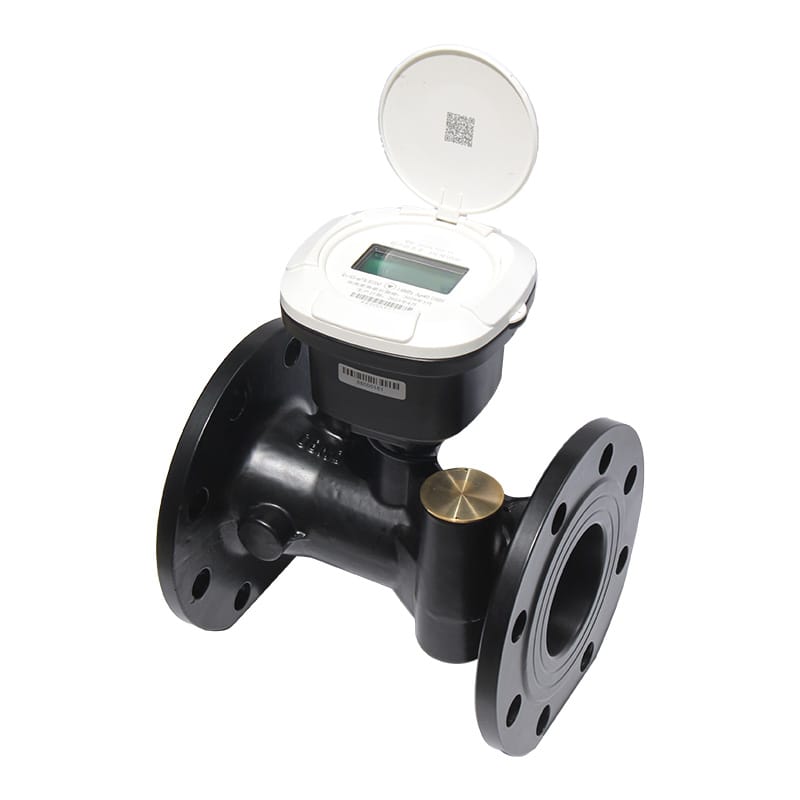
As a manufacturer, we are committed to delivering high-quality ultrasonic smart water meters with reliable performance and long-term stability.
Advanced Manufacturing and Quality Control
Our production process includes strict component testing, calibration, and final inspection to ensure product consistency and reliability.
High Accuracy and Reliability Testing
All meters undergo rigorous accuracy testing and long-term stability assessments to ensure compliance with international standards.
Customization and OEM Support
We offer custom solutions including:
- Customized communication modules (NB-IoT, LoRaWAN, RF)
- Custom casing and size options
- Customized data logging and protocol integration
Strong Supply Chain and Bulk Support
We support large-scale orders with competitive pricing and fast lead times.
Professional After-Sales Service
Our technical team provides installation guidance, calibration support, and troubleshooting services.
Conclusion
Ultrasonic smart water meters are a leading solution for modern water metering needs. They provide high accuracy, low maintenance, smart connectivity, and strong support for smart city water management, remote reading, leak detection, and IoT integration. As a manufacturer, we deliver reliable and customizable ultrasonic smart water meters designed to meet the needs of residential, commercial, and industrial applications.
If you are looking for a high-quality ultrasonic smart water meter, OEM customization, or bulk supply, please contact us for a quote and technical consultation. We are ready to support your project with professional solutions and fast delivery.
FAQ
Q1: What is the difference between ultrasonic smart water meter and smart water meter?
A: Ultrasonic smart water meter uses ultrasonic technology for measurement, while smart water meter is a broader term including mechanical and electromagnetic smart meters with communication capabilities.
Q2: Can ultrasonic smart water meters be used for hot water?
A: Yes, many ultrasonic smart water meters are designed for hot water systems with high-temperature-resistant materials.
Q3: How long is the battery life of an ultrasonic smart water meter?
A: Battery life depends on communication frequency and data transmission interval. With NB-IoT and optimized power management, battery life can reach 5–10 years.
Q4: Are ultrasonic smart water meters suitable for smart city projects?
A: Yes, due to their high accuracy, remote reading capability, and integration with IoT platforms, ultrasonic meters are ideal for smart city applications.