Water utilities, property developers, and smart city contractors are under growing pressure to improve billing accuracy, reduce manual reading work, and identify abnormal water use earlier. In many projects, the weak point is not only the pipe network itself. It is the lack of timely, reliable consumption data.
That is where an NB-IoT smart water meter becomes valuable.
Compared with traditional manual reading meters, an NB-IoT smart water meter can measure water consumption, transmit data remotely, support centralized management, and help operators detect unusual usage patterns. For apartment buildings, residential communities, rural water supply projects, and utility AMI upgrades, it can become a practical bridge between the physical pipeline and the digital management platform.
Dingjia provides smart water metering products including ultrasonic water meters, pipeline network ultrasonic water meters, and NB-IoT electronic remote valve controlled water meters for different project requirements.
Table of Contents
Why NB-IoT Smart Water Meter Projects Are Growing
Traditional water meter reading depends heavily on manual inspection. This creates several problems: delayed data, reading errors, high labor demand, difficult access to meters, and slow response to leaks or abnormal consumption.
An NB-IoT smart water meter changes the workflow. Instead of waiting for periodic manual reading, the meter can upload consumption data through a wide-area IoT network. This helps utilities and property managers move from “read after consumption” to “monitor during operation.”
The U.S. EPA explains that advanced metering infrastructure can provide frequent water usage data that helps facility managers understand consumption patterns and identify leaks before bills arrive. This is one reason AMI is increasingly important in modern water management. EPA WaterSense AMI guidance
For buyers, the real value is not simply wireless transmission. The value comes from the full system effect:
Better billing transparency
Lower manual reading workload
Faster abnormal usage discovery
Remote valve control options
Improved water loss management
More reliable consumption records
Better support for smart community platforms
This makes NB-IoT smart water meters especially useful in projects where many meters are installed across wide areas.
What Is an NB-IoT Smart Water Meter?
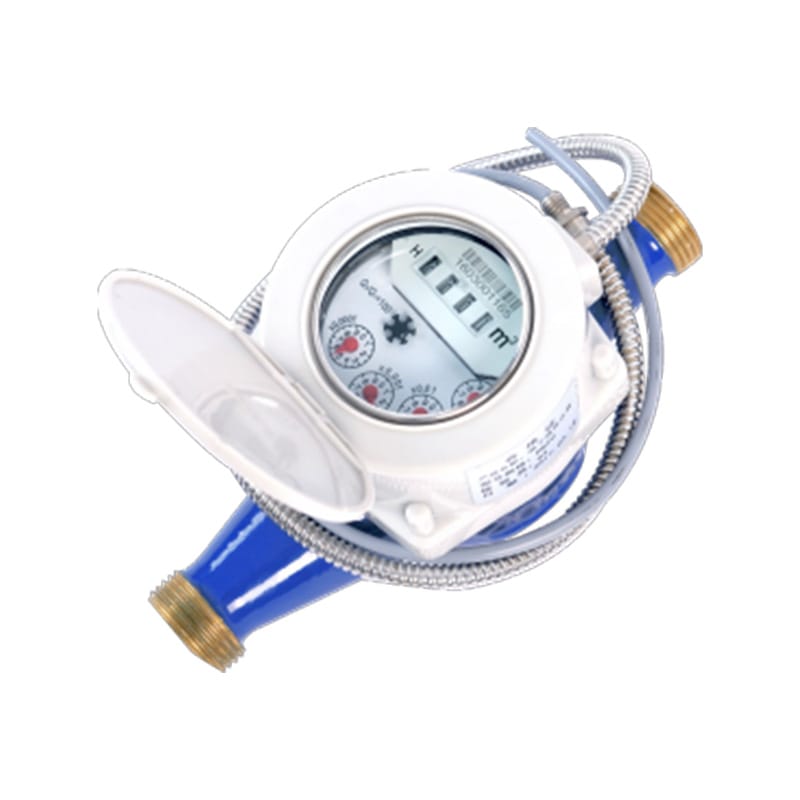
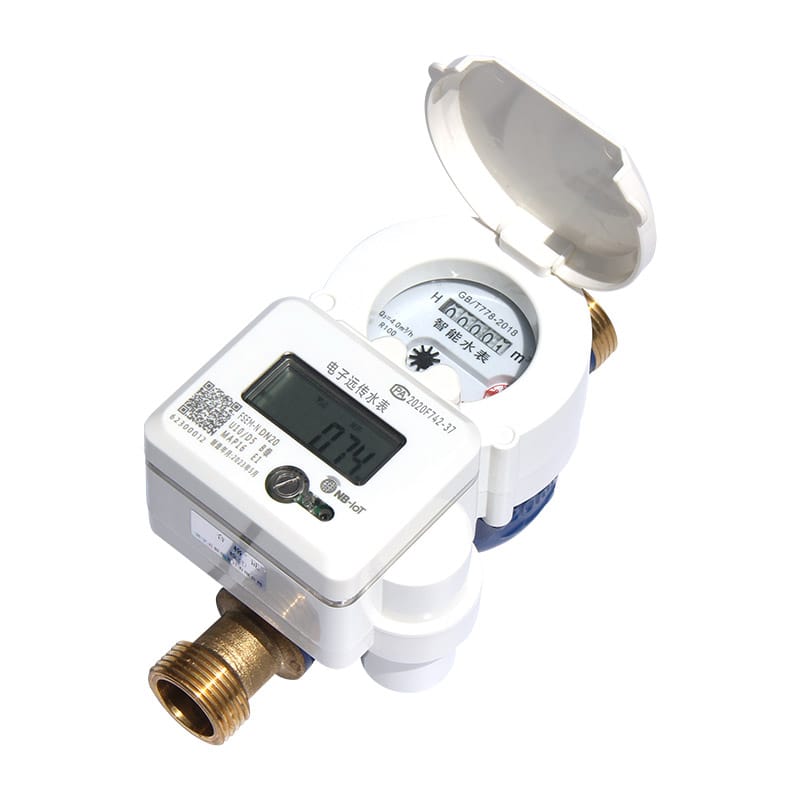
An NB-IoT smart water meter is a water meter that combines measurement, electronic data processing, and NB-IoT communication.
NB-IoT stands for Narrowband Internet of Things. It is designed for low-power, wide-area communication. In water metering projects, this is useful because meters are often installed in pipe wells, basements, meter boxes, outdoor cabinets, or other locations where frequent battery replacement and wired communication are inconvenient.
A typical NB-IoT smart water meter includes:
A measuring unit
An electronic module
A communication module
A battery power system
A data display section
Optional valve control
Sealing and protection structure
The meter measures consumption and sends data to a centralized platform. Operators can then view readings, analyze usage, identify abnormal conditions, and manage billing data.
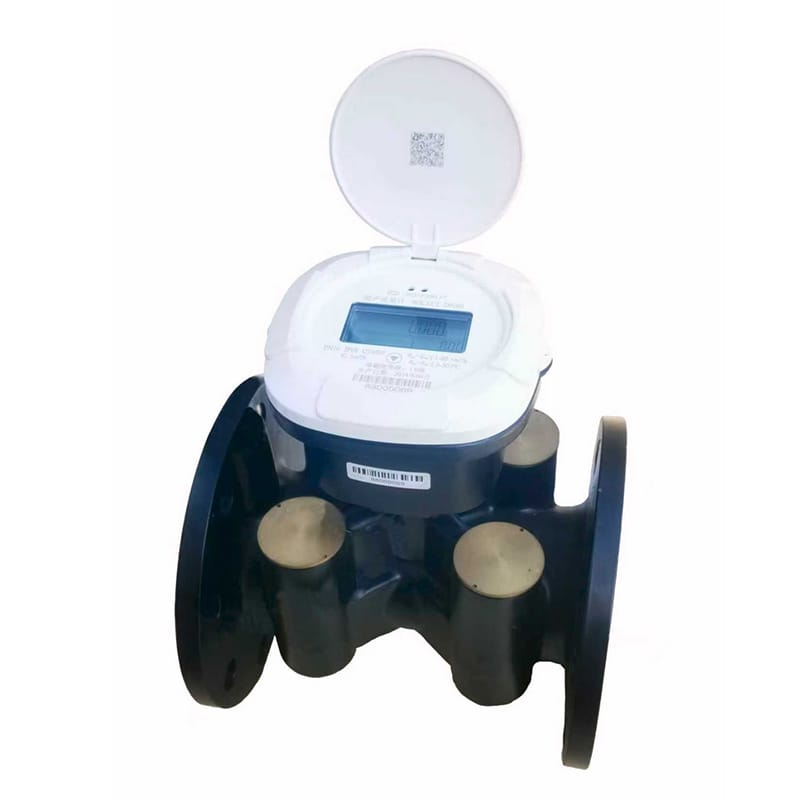
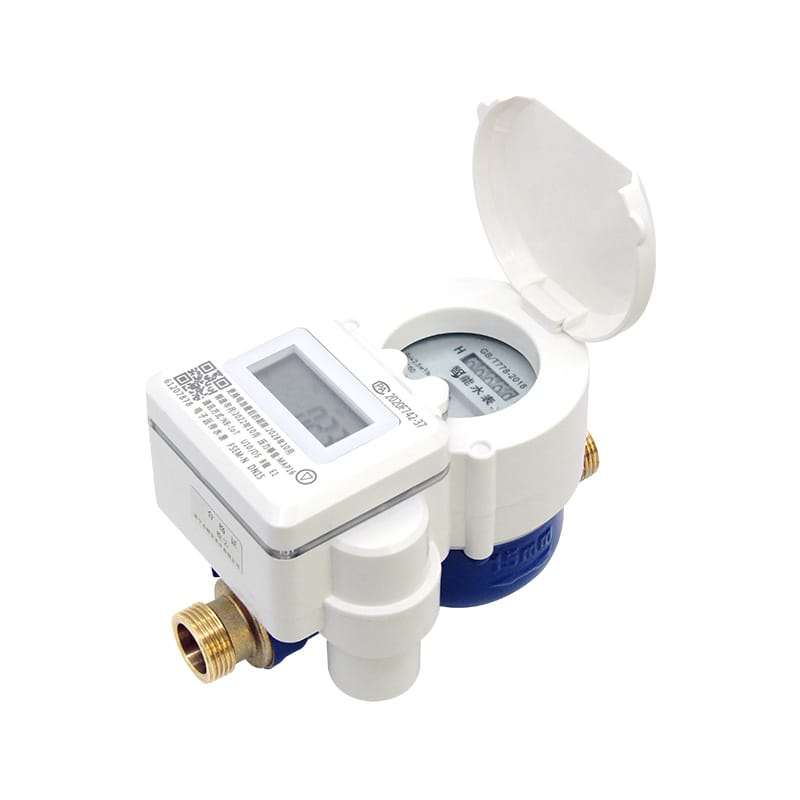
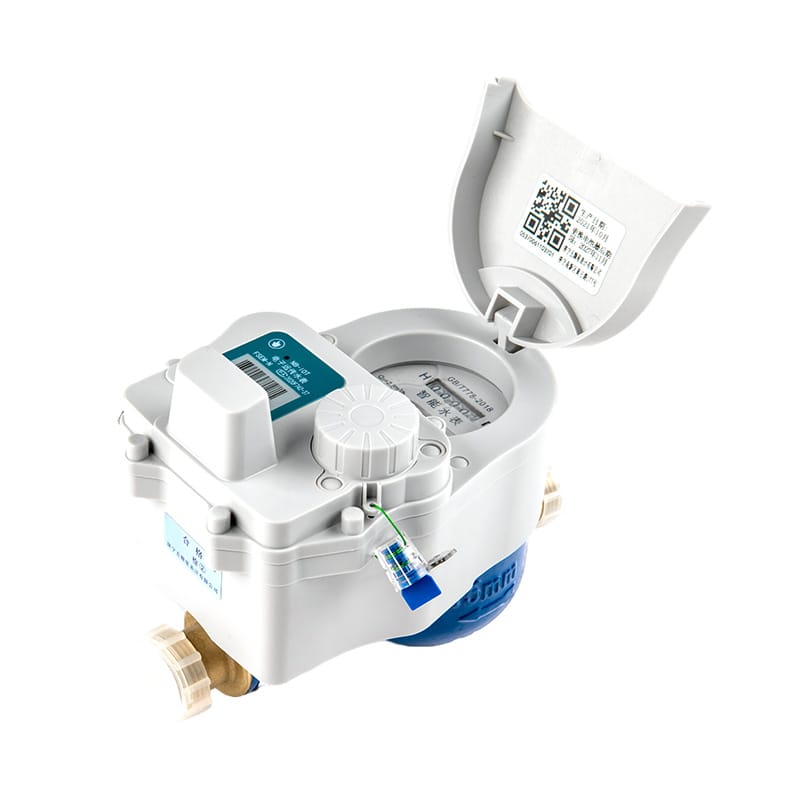
Dingjia’s NB-IoT electronic remote valve controlled water meter is designed for smart water service management, with IP68 sealing, large-screen display, remote data upload, and valve control functionality.
NB-IoT Smart Water Meter vs Traditional Manual Meter
A manual water meter can record consumption, but it does not automatically deliver data to the operator. This creates a gap between real water use and management action.
| Comparison Point | NB-IoT Smart Water Meter | Traditional Manual Meter |
|---|---|---|
| Reading method | Remote data upload | On-site manual reading |
| Data frequency | Configurable and more frequent | Periodic and delayed |
| Labor demand | Lower after deployment | Higher over time |
| Leak response | Faster through abnormal data alerts | Often delayed |
| Billing support | Digital and traceable | More dependent on manual records |
| Valve control | Available on selected models | Usually not available |
| Management platform | Suitable for AMI systems | Limited digital integration |
| Best use case | Utilities, apartments, smart communities, rural water projects | Basic metering with limited data needs |
For small projects, manual meters may still be acceptable. But for large residential communities, scattered rural users, utility upgrades, or projects requiring centralized control, an NB-IoT smart water meter provides stronger long-term management value.
How NB-IoT Smart Water Meters Help Reduce Non-Revenue Water
Non-revenue water is a major concern for water utilities. It refers to water that enters the distribution system but is not billed to customers. This can result from leaks, meter inaccuracies, unauthorized use, or data management problems.
The World Bank describes non-revenue water as water that is pumped and then lost or unaccounted for, and highlights that better NRW management can improve service, financial performance, and climate resilience. World Bank NRW overview
An NB-IoT smart water meter helps reduce NRW risk in several ways.
First, it improves customer-side data visibility. When meter data is uploaded regularly, utilities can compare billed consumption with supply-side data more quickly.
Second, it supports abnormal consumption detection. Sudden continuous flow, nighttime usage, or unexpected spikes may indicate leakage or unauthorized use.
Third, it reduces estimated billing. Accurate remote readings make billing more transparent and reduce disputes.
Fourth, remote valve control can support account management, emergency shutoff, and project-specific control strategies when local regulations and customer agreements allow it.
An NB-IoT smart water meter alone cannot solve every water loss problem. However, it gives operators the data foundation needed to manage water loss more actively.
Why Remote Valve Control Matters in Water Metering
Remote valve control is one of the most important differences between a basic smart meter and a more advanced water management device.
A remote valve controlled water meter can support:
Remote opening and closing
Prepaid water management
Emergency shutoff
Account status control
Abnormal event response
Maintenance coordination
For property managers, this can reduce the need for repeated site visits. For utilities, it can improve operational efficiency in large-scale user management.
However, remote valve control should be used responsibly. Before deployment, buyers should confirm local regulations, user agreements, operational permissions, and platform security requirements.
Dingjia’s remote valve controlled water meter is suitable for smart water service projects that require centralized reading and valve management.
Best Applications for NB-IoT Smart Water Meter Projects
An NB-IoT smart water meter is not only for municipal water utilities. It can be used in multiple project types where remote reading and centralized management are important.
Residential Communities
In apartment buildings and residential compounds, meters are often installed in pipe wells or shared meter rooms. Manual reading can be inefficient and disruptive. NB-IoT smart water meters allow property managers or utility operators to collect data remotely and support more transparent billing.
Rural Water Supply
Rural water projects often involve scattered users and long travel distances. NB-IoT communication can reduce the need for manual inspection routes and support centralized water supply management.
Smart City Water Infrastructure
Smart city projects require digital utility data. Smart water meters can become part of a wider IoT infrastructure that includes heating meters, valves, sensors, and centralized platforms.
Commercial Buildings
Hotels, schools, office buildings, hospitals, and industrial parks often need accurate water consumption records by zone, tenant, or building section. Smart water meters support internal allocation, water-saving programs, and facility operation analysis.
Utility AMI Upgrades
For utilities planning AMI deployment, smart water meters are the field data source. A successful AMI project depends on meter accuracy, communication reliability, platform compatibility, and long-term maintenance planning.
The Water Research Foundation notes that utilities are increasingly using AMI meter data not only for billing but also for broader utility and customer benefits. WaterRF AMI meter data analytics
Key Specifications Buyers Should Check
Buying an NB-IoT smart water meter should not be based only on appearance or pipe size. The meter must match the project environment, data needs, and long-term operation plan.
Diameter and Flow Range
Confirm the required nominal diameter and actual flow conditions. A meter that is too large may not capture low flow accurately. A meter that is too small may create unnecessary pressure loss or overload risk.
For larger network applications, Dingjia’s pipeline network ultrasonic water meter is designed for complex pipeline systems and supports bidirectional metering, multiple communication methods, and IP68 protection.
Accuracy Level
Accuracy affects billing confidence and project acceptance. For international water metering projects, ISO 4064 is a key reference for water meter metrological and technical requirements. ISO 4064-1 information
Buyers should check whether the meter’s accuracy level, flow range, and test documentation match the project requirements.
Protection Level
Water meters are often exposed to moisture, condensation, flooding risk, or harsh installation environments. IP68 protection is highly valuable for underground meter boxes, outdoor cabinets, humid pipe wells, and rural projects.
Battery Life
NB-IoT meters must operate for years without frequent battery replacement. Buyers should confirm battery capacity, power consumption strategy, reporting frequency, and field replacement requirements.
Communication Stability
NB-IoT performance depends on signal coverage, installation location, antenna design, upload frequency, and platform compatibility. Before large-scale deployment, project teams should test meter communication in real installation environments.
Valve Reliability
For remote valve controlled meters, the valve mechanism must be reliable. Buyers should check valve opening and closing performance, anti-blocking design, fault recovery, and manual emergency options.
Data Storage
Local data storage protects project reliability. Even if communication is interrupted, the meter should preserve key consumption records and upload data when communication resumes.
Platform Compatibility
A smart meter is part of a system. Buyers should confirm whether the meter can connect with the required reading platform, billing software, or utility data system.
Ultrasonic Water Meter or NB-IoT Valve Controlled Meter: Which One Fits?
Different water metering projects require different product types.
An ultrasonic water meter is suitable when the project prioritizes high-precision measurement, no moving parts, low start flow, and flexible installation.
An NB-IoT electronic remote valve controlled water meter is suitable when the project requires remote reading plus valve management.
A pipeline network ultrasonic water meter is suitable for larger pipeline monitoring, district water supply management, and network-level measurement.
| Project Requirement | Recommended Product Direction |
| Apartment user billing | NB-IoT smart water meter |
| Remote account management | Remote valve controlled water meter |
| High-precision low-flow measurement | Ultrasonic water meter |
| Large pipeline monitoring | Pipeline network ultrasonic water meter |
| Smart community water management | Smart water meter with platform connection |
| Rural scattered users | NB-IoT remote reading water meter |
The best choice depends on whether the project needs only measurement, measurement plus communication, or measurement plus communication and valve control.
Common Procurement Mistakes to Avoid
Many water metering projects face problems not because the meter is unsuitable in general, but because the selection process misses important field conditions.
Choosing Only by Unit Function
A meter may support NB-IoT, but that does not guarantee project success. Buyers must also check platform compatibility, signal environment, installation location, and data reporting rules.
Ignoring Signal Testing
A large project should not rely only on theoretical coverage. Field signal testing should be completed before batch deployment, especially in basements, underground meter rooms, and thick-walled buildings.
Overlooking Installation Space
Some meters may require specific installation orientation, connection length, or protection space. Check pipe layout before confirming the model.
Underestimating Data Management
Remote reading creates data. That data must be stored, cleaned, analyzed, and connected to billing or management workflows. A smart meter project should include a data plan, not just a hardware purchase.
Forgetting Maintenance Access
Even long-life devices may require inspection or replacement in the future. Meter boxes, pipe wells, and installation positions should allow safe maintenance access.
What Makes a Reliable Smart Water Meter Supplier?
For utilities, contractors, and importers, the supplier should be evaluated beyond product appearance.
A reliable supplier should provide stable manufacturing, clear technical documentation, quality control, product testing, communication support, and project selection guidance.
Dingjia focuses on ultrasonic metering instruments and smart metering system solutions, covering water meters, heat meters, flow meters, intelligent valves, and accessories. Buyers can review the full smart metering product range or use the contact page to discuss project requirements.
Buyer Checklist Before Ordering
Before confirming an NB-IoT smart water meter project, check these points:
Application scenario
Pipe diameter
Flow range
Accuracy requirement
Installation environment
Protection level
NB-IoT signal condition
Battery life requirement
Valve control requirement
Data upload frequency
Platform compatibility
Local regulation and user agreement
Required documentation
After-sales support
This checklist helps reduce project risk and makes supplier communication more efficient.
FAQ
What is an NB-IoT smart water meter?
An NB-IoT smart water meter is a water meter that measures water consumption and transmits data remotely through NB-IoT communication. It is used for remote reading, billing management, leak monitoring, and smart water service projects.
Is an NB-IoT smart water meter suitable for apartment buildings?
Yes. It is suitable for apartment buildings because it reduces manual reading work, supports centralized data collection, and helps property managers or utilities manage many users more efficiently.
Can an NB-IoT smart water meter detect leaks?
It can help identify possible leaks by monitoring abnormal consumption patterns, continuous flow, or unusual usage spikes. The final leak judgment depends on the platform algorithm, project configuration, and operating rules.
What is the difference between an ultrasonic water meter and an NB-IoT smart water meter?
An ultrasonic water meter refers mainly to the measurement technology. An NB-IoT smart water meter refers mainly to the communication method. Some projects may use ultrasonic measurement with smart communication, depending on product design.
Does a smart water meter need a management platform?
For full remote reading and data analysis, a management platform is usually required. The meter collects and transmits data, while the platform displays readings, manages users, generates reports, and supports alerts.
Conclusion
An NB-IoT smart water meter is not just a replacement for a traditional meter. It is a data entry point for modern water management.
For utilities, it helps improve remote reading, reduce manual workload, and support non-revenue water management. For property developers and smart community projects, it enables clearer billing, centralized monitoring, and better user management. For rural and scattered water supply projects, it can reduce site visits and improve operational visibility.
The key is to select the right meter for the right scenario. Buyers should evaluate flow range, accuracy, communication stability, IP protection, battery life, valve control, and platform compatibility before deployment.
Dingjia provides smart water metering products for residential, commercial, utility, and pipeline network applications. To choose a suitable model for your project, visit the water meter product category or contact Dingjia for technical support.