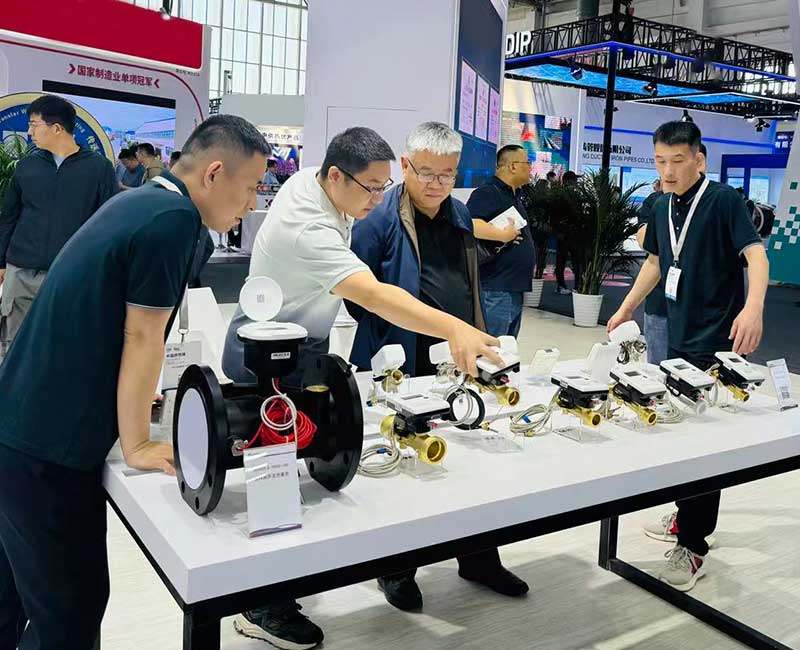
District heating is no longer just a pipe network that delivers heat from a central plant to buildings. For utilities, property developers, facility managers, and smart city projects, it has become a data-driven energy system. The challenge is clear: heating networks need accurate billing, lower heat loss, better user transparency, and reliable remote management.
That is why the ultrasonic heat meter has become a critical device in modern heating projects.
Unlike traditional mechanical meters, an ultrasonic heat meter measures flow without moving parts. It combines ultrasonic flow sensing, paired temperature sensors, and a calculator to determine how much thermal energy is consumed. In real projects, this means fewer mechanical wear issues, better low-flow measurement, and stronger compatibility with remote reading systems.
For B2B buyers, the question is not simply “Which heat meter should I buy?” A better question is: “Which ultrasonic heat meter can support accurate billing, long-term data collection, and future smart heating management?”
This guide explains how ultrasonic heat meters work, where they are used, what specifications matter, and how to choose the right solution for district heating, residential buildings, commercial facilities, and renovation projects.
Table of Contents
Why Ultrasonic Heat Meter Demand Is Rising in District Heating
Heating networks are under pressure from several directions. Energy efficiency requirements are becoming stricter. Building owners want clearer consumption data. Utilities need faster meter reading and fewer site visits. End users also expect fair billing based on actual usage rather than estimated consumption.
According to the International Energy Agency, district heating remains an important part of global heating infrastructure, especially in China, Europe, and other markets with dense urban heating demand. As these systems become more digital, metering equipment is moving from simple reading devices to connected data nodes.
An ultrasonic heat meter fits this trend because it supports:
Accurate thermal energy measurement
Remote data transmission
Low pressure loss
No moving parts inside the measuring channel
Long-term stable operation
Integration with smart heating platforms
For new district heating projects, ultrasonic metering is often selected from the beginning. For renovation projects, it is used to upgrade older mechanical meters and create a more reliable data foundation.
Dingjia provides heat meter solutions designed for household, commercial, and pipeline network applications, helping heating operators build more accurate and manageable energy systems.
How an Ultrasonic Heat Meter Works
An ultrasonic heat meter measures heat energy by combining three types of data: flow rate, supply water temperature, and return water temperature.
The flow sensor measures how much water passes through the pipe. The temperature sensors measure the temperature difference between the supply and return pipes. The calculator then uses this information to calculate thermal energy consumption.
In simple terms:
Heat energy = flow volume × temperature difference × heat coefficient
The ultrasonic part mainly refers to the flow measurement method. Instead of using an impeller or other moving component, the meter sends ultrasonic signals through the water. When water flows, the signal transmission time changes. The meter calculates flow velocity from this time difference.
This structure gives an ultrasonic heat meter several practical advantages:
There are no rotating parts to wear down.
The measuring channel is less affected by friction.
Low-flow sensitivity is usually better.
Pressure loss can be reduced.
The meter is suitable for long-term data collection.
For heating systems where flow may change frequently during the day, these advantages are valuable. A meter that performs well only at stable flow conditions may not provide reliable billing data in real operating environments.
Ultrasonic Heat Meter vs Mechanical Heat Meter
Many older heating systems still use mechanical heat meters. These meters can work in basic applications, but they may face limitations when the network requires high data quality, remote reading, and long service intervals.
| Comparison Point | Ultrasonic Heat Meter | Mechanical Heat Meter |
|---|---|---|
| Flow measurement | Ultrasonic signal measurement | Moving mechanical components |
| Moving parts | No moving parts in the flow channel | Usually includes rotating parts |
| Low-flow performance | Stronger low-flow sensitivity | May lose accuracy at very low flow |
| Pressure loss | Generally lower | Usually higher |
| Long-term wear | Less affected by mechanical wear | Wear may affect accuracy over time |
| Maintenance demand | Lower in suitable water conditions | Higher when sediment or wear occurs |
| Remote reading compatibility | Strong compatibility with smart systems | Depends on model and module |
| Best use cases | Smart heating, district heating, commercial buildings, renovation projects | Basic metering systems with lower digital requirements |
This does not mean mechanical meters have no value. In simple systems with limited digital requirements, they may still be used. However, for projects involving remote reading, long-term billing accuracy, or smart energy management, an ultrasonic heat meter is usually the more future-ready option.
Where Ultrasonic Heat Meters Are Used
An ultrasonic heat meter can be used in many heating and cooling applications. The key is to select the right diameter, communication method, protection level, and installation structure.
Residential Buildings
In apartment buildings, residential communities, and new housing projects, household-level heat metering supports individual billing and consumption transparency. A compact meter is usually preferred because installation space is limited.
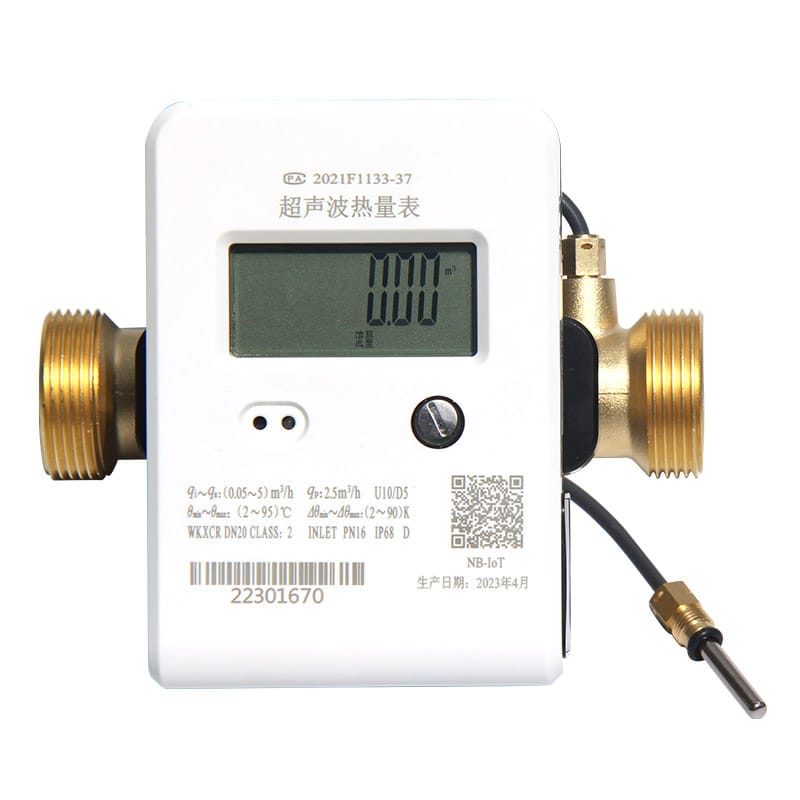
For this type of application, a household ultrasonic heat meter is suitable for smaller pipe diameters and individual user measurement. It supports heating and cooling measurement, remote communication options, and long-term data storage.
District Heating Networks
Large heating networks require meters for pipeline sections, substations, building entrances, and branch monitoring. These meters often need larger diameters, stable performance under changing flow conditions, and strong communication capability.
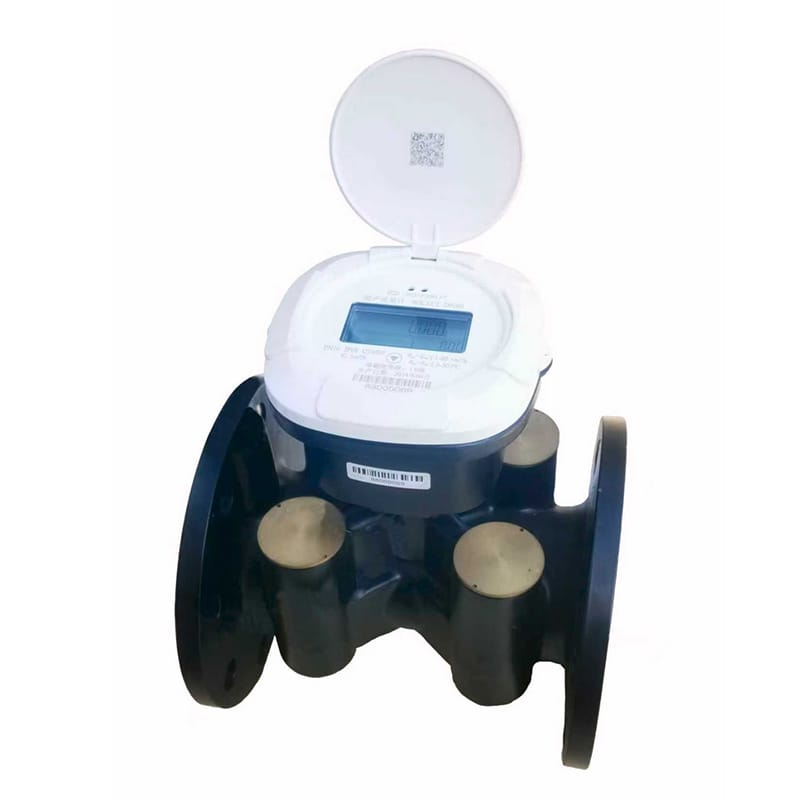
A pipeline network ultrasonic heat meter is more suitable for large-diameter heating systems where flow capacity, turndown ratio, data communication, and protection level are critical.
Commercial Buildings
Office buildings, shopping centers, hotels, hospitals, schools, and industrial parks often need heat meters for energy allocation and internal management. In these projects, the meter is not only used for billing. It also supports energy audits, HVAC performance monitoring, and operational optimization.
Renovation and Retrofit Projects
In renovation projects, the metering system must often fit existing pipe layouts. Buyers should pay close attention to pipe diameter, connection type, available straight pipe length, communication wiring, and meter reading platform compatibility.
If a project also involves flow regulation, an intelligent control valve can help heating systems achieve more precise remote control and temperature management.
What Buyers Should Check Before Choosing an Ultrasonic Heat Meter
Selecting an ultrasonic heat meter should not be based only on nominal diameter or appearance. In procurement, several technical and project-related factors directly affect long-term results.
1. Pipe Diameter and Flow Range
The meter must match the actual flow conditions, not only the pipe size. A common mistake is choosing a meter based only on DN size while ignoring minimum flow, common flow, and maximum flow.
If the meter is too large, low-flow measurement may become less accurate. If it is too small, pressure loss or overload risk may increase. Buyers should compare the real system flow profile with the meter’s rated flow range.
2. Accuracy Level
Accuracy level is important for billing confidence. In many projects, heat meters are expected to comply with national or regional metering standards. For European-related projects, buyers may need to pay attention to thermal energy meter standards such as EN 1434. CEN-CENELEC has published information on harmonized standards for thermal energy measurement, which is useful for understanding the regulatory direction.
For China-related projects, GB/T32224-2020 may be an important reference standard for heat meters.
3. Temperature Sensor Type
A heat meter is only as reliable as its temperature measurement. PT1000 temperature sensors are widely used because they provide stable temperature detection for heating and cooling applications.
Buyers should check:
Temperature measurement range
Temperature difference range
Sensor cable length
Installation method
Sensor pairing quality
Response stability
Poor temperature sensor installation can affect the entire heat calculation, even if the flow sensor itself is accurate.
4. Communication Method
Modern heating projects increasingly require remote reading. The European Commission Energy Efficiency Directive also reflects the broader policy trend toward better energy consumption information and efficiency improvement.
Common communication options include:
M-Bus
RS485
LoRa
NB-IoT
Infrared reading
Modbus-compatible communication
The right option depends on the project scale, network structure, data platform, reading frequency, and installation environment.
5. Protection Level
Meters installed in basements, pipe wells, underground chambers, or humid environments need strong protection. IP68 protection is valuable when the meter may face moisture, condensation, temporary water exposure, or harsh field conditions.
For district heating and pipeline network applications, protection level should not be treated as a minor detail. It can directly affect meter reliability and maintenance frequency.
6. Power Supply and Battery Life
Many ultrasonic heat meters use lithium batteries. For remote or hard-to-access installations, long battery life reduces maintenance workload. Buyers should check whether the meter supports online battery replacement, low-power design, and power-off data protection.
Dingjia’s ultrasonic heat meter products support long-life battery operation and historical data storage, helping operators reduce the risk of data loss during power interruptions.
7. Data Storage
A good ultrasonic heat meter should not only display current consumption. It should also store historical data for troubleshooting, billing verification, and operational analysis.
Useful data may include:
Monthly consumption
Historical flow data
Temperature records
Fault alarms
Battery status
Meter working time
Communication status
In smart heating systems, historical data becomes valuable for load forecasting, abnormal consumption detection, and network balancing.
How Ultrasonic Heat Meters Support Fair Billing
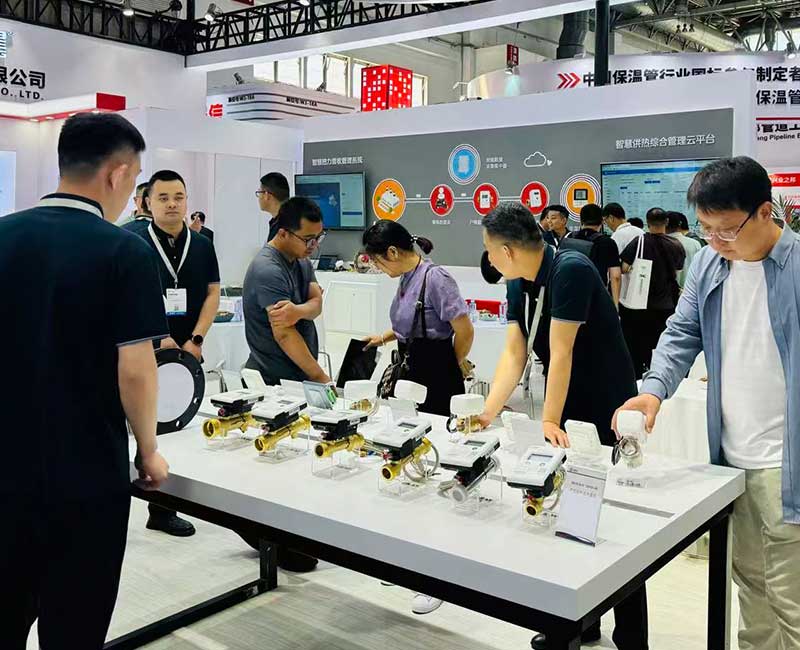
In district heating, billing disputes often happen when users do not trust the measurement process or when operators cannot explain consumption differences clearly. An ultrasonic heat meter helps reduce these problems by providing more accurate and traceable data.
For residential communities, this supports user-level billing.
For commercial buildings, it supports tenant-level or zone-level energy allocation.
For heating utilities, it supports transparent supply and consumption comparison.
For energy service companies, it supports performance-based energy management.
Fair billing depends on three conditions:
The meter must measure accurately.
The data must be readable and traceable.
The system must be installed correctly.
Remote reading adds another layer of value. Instead of manually collecting readings, operators can receive data from meters through M-Bus, RS485, LoRa, or NB-IoT. This reduces labor, improves reading frequency, and supports faster abnormal data detection.
Why Low-Flow Measurement Matters More Than Many Buyers Realize
Heating systems do not always operate at peak flow. In real buildings, flow changes based on weather, valve opening, user demand, time of day, and system control strategy.
Low-flow conditions are especially important in:
Mild weather periods
Part-load heating operation
Nighttime heating schedules
Individual apartments with low consumption
Hydraulic balancing conditions
Energy-saving control modes
If a meter cannot capture low flow accurately, consumption may be under-recorded or inconsistent. For utilities, this can affect revenue and network analysis. For users, it can affect billing fairness.
An ultrasonic heat meter with a wide turndown ratio is better suited to variable heating conditions. Dingjia’s pipeline network ultrasonic heat meter supports a wide measurement range and is designed for large heating systems where stable performance across different flow levels is essential.
Installation Factors That Affect Ultrasonic Heat Meter Accuracy
Even a high-quality ultrasonic heat meter can perform poorly if installation conditions are ignored. Before procurement and installation, project teams should review the site carefully.
Key installation considerations include:
Correct flow direction
Adequate pipe alignment
Avoiding strong vibration
Proper sensor placement
Avoiding air accumulation
Stable water quality
Suitable straight pipe conditions
Correct supply and return sensor installation
Good cable protection
The meter should be installed where it can measure stable flow. Air bubbles, severe turbulence, poor grounding, or incorrect sensor placement may affect measurement results.
For large projects, installation drawings should be reviewed before shipment. This helps avoid mismatch between meter structure, pipe connection, and field conditions.
Choosing Between Household and Pipeline Network Ultrasonic Heat Meters
Different applications require different meter structures. A household meter is not suitable for large-diameter network monitoring, and a pipeline network meter may be unnecessary for small apartment-level measurement.
| Application | Recommended Meter Type | Key Requirements |
| Apartment-level heating billing | Household ultrasonic heat meter | Compact size, low-flow sensitivity, remote reading |
| Residential community metering | Household or building-level meter | Stable data, batch management, communication support |
| Building entrance metering | Medium-size ultrasonic heat meter | Reliable billing, data storage, communication interface |
| District heating branch network | Pipeline network ultrasonic heat meter | Large DN range, wide flow range, IP protection |
| Commercial HVAC energy allocation | Ultrasonic heat meter | Cooling/heating measurement, data traceability |
| Renovation project | Selected by pipe layout | Installation flexibility, communication compatibility |
For smaller residential projects, the household ultrasonic heat meter is usually the practical choice. For larger district heating networks, the pipeline network ultrasonic heat meter offers stronger suitability for larger diameters and higher flow requirements.
The Role of Ultrasonic Heat Meter Data in Smart Heating
A smart heating system depends on reliable data. Without accurate metering, the platform cannot make meaningful decisions.
Ultrasonic heat meter data can support:
Consumption monitoring
Remote billing
Heat loss analysis
Building-level comparison
Abnormal consumption alerts
Hydraulic balancing
Energy-saving evaluation
User behavior analysis
Equipment performance review
The U.S. Department of Energy describes district energy systems as networks that include generation plants, distribution piping, and building interconnections such as meters, valves, and pumps. You can learn more from the DOE district energy systems overview.
In practical heating management, meters and control valves work together. The meter shows what is happening. The valve helps adjust what should happen next. This combination makes heating systems more measurable, controllable, and efficient.
Common Procurement Mistakes to Avoid
B2B buyers often focus on the unit itself but overlook the full system requirements. This can lead to problems after installation.
Mistake 1: Selecting Only by Pipe Diameter
DN size is important, but it is not enough. Flow range, pressure loss, temperature range, and communication method must also match the project.
Mistake 2: Ignoring Communication Compatibility
A meter may be accurate, but if it cannot connect to the required reading system, it may create extra integration work. Confirm communication protocols before ordering.
Mistake 3: Overlooking Installation Conditions
Field conditions can affect performance. Pipe layout, humidity, wiring route, and available space should be checked early.
Mistake 4: Treating Data Storage as Optional
Historical data helps resolve billing questions and troubleshoot system problems. For heating utilities, data traceability is not optional; it is part of long-term operation.
Mistake 5: Choosing a Meter Without Technical Support
Heat metering projects often require parameter confirmation, installation guidance, and communication debugging. A manufacturer with technical support can reduce project risk.
Dingjia supports smart metering projects with ultrasonic heat meters, water meters, control valves, and system solutions. Buyers can review the full product range through the smart metering products page or contact the team for project selection support.
What Makes a Reliable Ultrasonic Heat Meter Manufacturer
For importers, utilities, contractors, and engineering companies, the supplier choice is as important as the product model. A reliable ultrasonic heat meter manufacturer should offer more than a catalog.
Important supplier capabilities include:
Stable production capacity
Consistent quality control
Complete meter testing capability
Clear technical documentation
Support for multiple communication options
Ability to match project specifications
Experience with heating, water supply, and smart city applications
After-sales technical support
For large projects, batch consistency matters. If meter performance varies between batches, operators may face reading differences, maintenance issues, or integration problems. Manufacturing control, testing process, and component selection should therefore be part of supplier evaluation.
Dingjia focuses on ultrasonic metering instruments and smart metering system solutions, covering heat meters, water meters, flow meters, valves, and accessories. For project consultation, buyers can use the contact page to discuss meter size, communication method, installation requirements, and application scenarios.
Practical Selection Checklist for Ultrasonic Heat Meter Projects
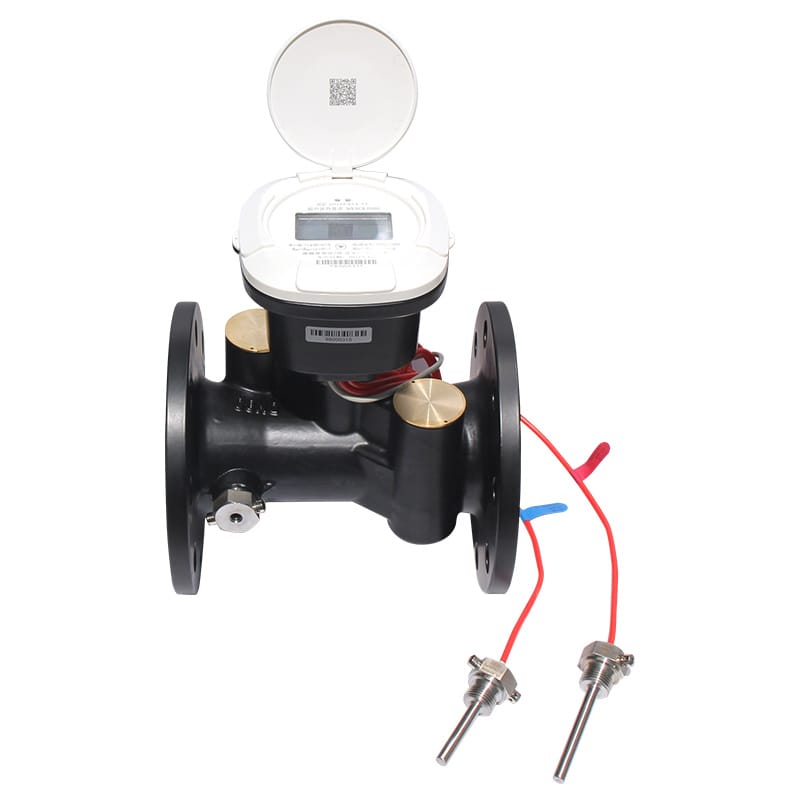
Before confirming an ultrasonic heat meter order, use the checklist below.
| Selection Item | What to Confirm |
| Application type | Household billing, building metering, district heating, commercial HVAC, renovation |
| Pipe diameter | DN size and connection method |
| Flow range | Minimum, common, and maximum flow requirements |
| Temperature range | Heating or heating/cooling dual-use |
| Accuracy requirement | Project standard, billing requirement, local regulation |
| Communication | M-Bus, RS485, LoRa, NB-IoT, infrared, Modbus compatibility |
| Protection level | Indoor, pipe well, humid, underground, IP requirement |
| Power supply | Battery, DC power, replacement method |
| Data storage | Monthly data, historical records, power-off memory |
| Installation space | Pipe layout, straight pipe condition, wiring route |
| Supplier support | Technical documents, testing, customization, after-sales assistance |
This checklist helps prevent common mismatches and makes supplier communication more efficient.
FAQ
What is an ultrasonic heat meter used for?
An ultrasonic heat meter is used to measure thermal energy consumption in heating and cooling systems. It is widely used in district heating, residential buildings, commercial facilities, and smart energy management projects.
Is an ultrasonic heat meter better than a mechanical heat meter?
For smart heating and remote reading projects, an ultrasonic heat meter is usually more suitable because it has no moving parts, supports stable low-flow measurement, and integrates well with digital metering systems.
Can ultrasonic heat meters support remote reading?
Yes. Many ultrasonic heat meters support communication options such as M-Bus, RS485, LoRa, NB-IoT, and infrared reading, depending on the model and project requirements.
Where should an ultrasonic heat meter be installed?
It should be installed in a suitable pipe section with correct flow direction, stable flow conditions, proper temperature sensor placement, and enough space for reading, wiring, and maintenance.
How do I choose the right ultrasonic heat meter?
You should confirm pipe diameter, flow range, temperature range, communication method, accuracy requirement, protection level, power supply, and installation conditions before selecting a model.
Conclusion
An ultrasonic heat meter is no longer just a measuring device. In modern district heating and building energy systems, it is a core data source for billing, remote reading, energy analysis, and smart control.
For buyers, the best choice depends on the real application. Household projects need compact meters with reliable low-flow sensitivity. Pipeline networks need large-diameter meters with strong protection, wide flow measurement, and stable communication. Commercial and renovation projects need flexible integration and long-term data traceability.
As heating systems move toward digital operation, selecting the right ultrasonic heat meter can help improve billing accuracy, reduce manual reading work, support better energy management, and prepare the system for future smart heating upgrades.
Dingjia provides ultrasonic heat meters, smart water meters, flow meters, intelligent valves, and metering accessories for different project requirements. If you are planning a district heating, residential metering, or smart energy project, you can contact Dingjia for product selection and technical support.