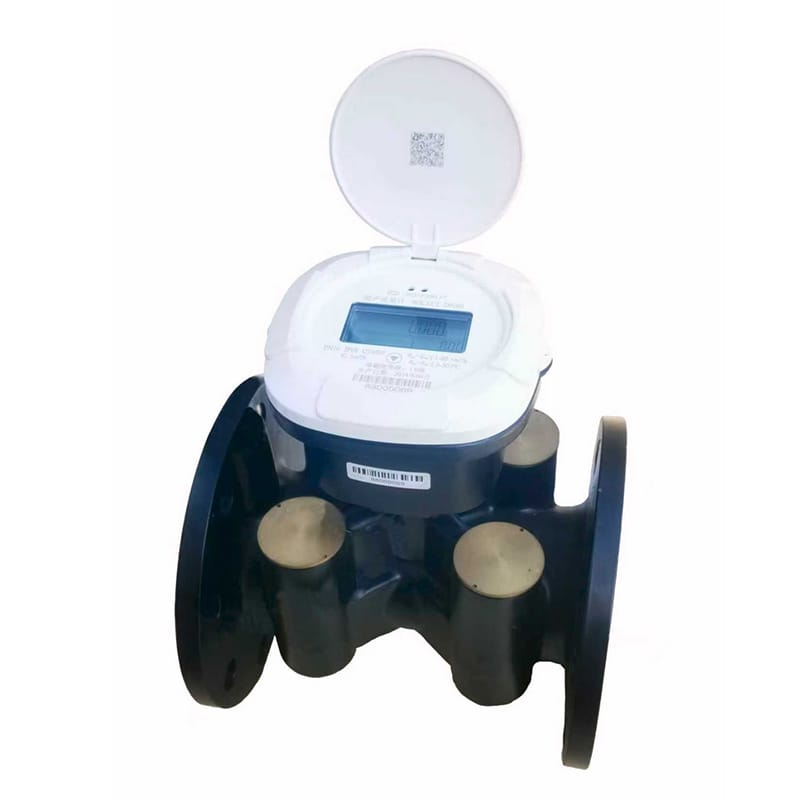
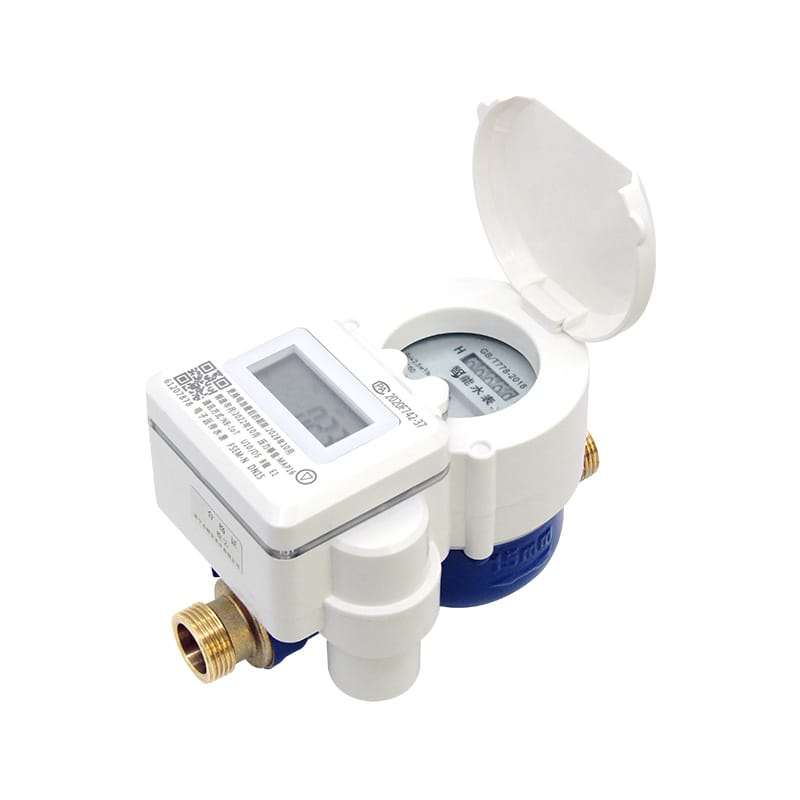
Choosing a water meter by pipe diameter alone can produce misleading results. Two DN20 meters may fit the same connection yet perform very differently at low flow, normal demand, or short peak conditions.
The essential distinction is simple:
A water meter accuracy class defines the permitted measurement error, while the R ratio defines how wide the meter’s specified flow range is.
A high R ratio does not automatically mean a meter has a tighter error limit. Likewise, a higher accuracy class does not guarantee good field results if the meter is oversized, installed incorrectly, or operated outside its approved conditions.
This guide explains water meter accuracy classes, Q1, Q2, Q3, Q4, R100–R400 ratios, maximum permissible error, sizing, installation, and the documents buyers should verify before placing a project order.
Table of Contents
The One-Minute Answer: Accuracy Class and R Ratio Are Different
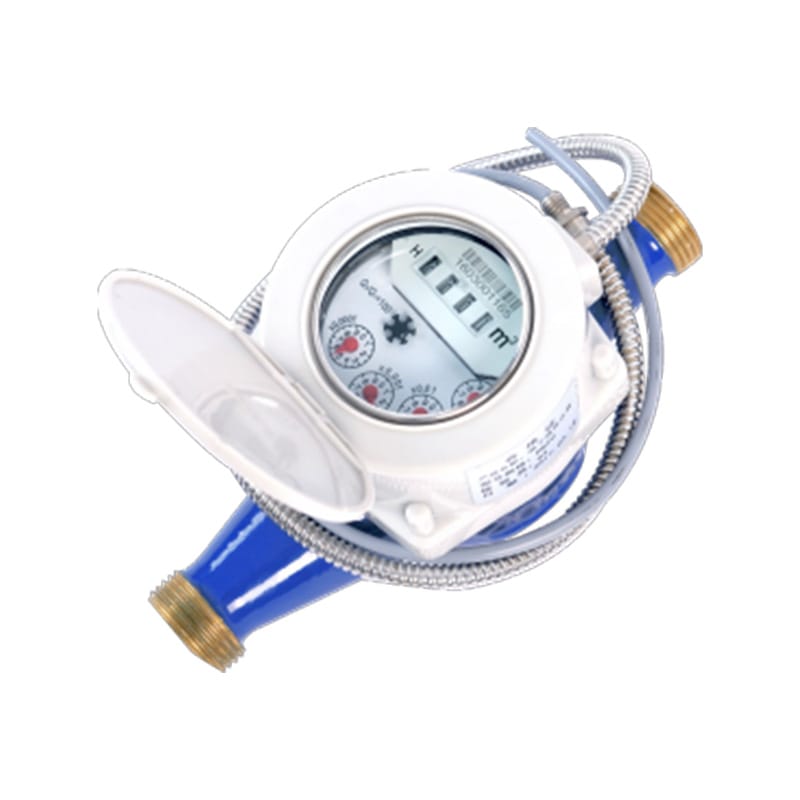
Water meter performance should be evaluated in at least three layers:
- Accuracy class: the maximum permissible error within specified flow zones.
- Measuring range: the absolute flow limits defined by Q1, Q2, Q3, Q4, and the R ratio.
- Field performance: the effect of sizing, orientation, pipe conditions, water quality, air, pressure, temperature, and installation.
The current ISO 4064-1:2024 standard covers the metrological and technical requirements for mechanical, electrical, electronic, and hybrid water meters. The corresponding OIML R 49-1:2024 recommendation uses the same modern framework.
| Specification | What It Describes | Main Buyer Question |
|---|---|---|
| Accuracy Class 1 or 2 | Permitted measurement error | How close must the indicated volume be to the reference volume? |
| Q1 | Minimum specified flow | What is the lowest flow covered by the stated error limit? |
| Q2 | Transitional flow | Where does the lower error zone change to the upper zone? |
| Q3 | Permanent flow | What flow can the meter handle under normal operating conditions? |
| Q4 | Overload flow | What short-duration peak can the meter tolerate? |
| R ratio | Q3 divided by Q1 | How wide is the specified measurement range? |
| Starting flow | Flow that first produces an indication | Can the meter detect movement below Q1, without necessarily guaranteeing class accuracy? |
The last distinction is frequently overlooked: starting flow is not the same as Q1.
What Do Q1, Q2, Q3, and Q4 Mean?
The four flow points divide a water meter’s operating range into meaningful zones. They should be stated in a consistent unit such as m³/h or L/h.
Q1: Minimum Flow Rate
Q1 is the lowest flow rate at which the meter must remain within its applicable maximum permissible error under the specified operating conditions.
It is the most useful absolute value when evaluating low-flow performance. A higher R ratio lowers Q1 only when Q3 remains the same.
Water below Q1 may still produce an indication, but the stated accuracy-class limit does not automatically apply there.
Q2: Transitional Flow Rate
Q2 separates the measuring range into two zones:
- The lower zone extends from Q1 up to, but not including, Q2.
- The upper zone extends from Q2 through Q4.
The lower zone normally has a wider permissible error because very small flows are more difficult to measure consistently.
Q3: Permanent Flow Rate
Q3 is the highest flow at which the water meter is intended to operate satisfactorily under normal rated conditions.
For procurement and sizing, Q3 is more meaningful than pipe diameter alone. The selected Q3 should cover sustained and recurring demand without treating Q4 as the normal operating point.
Q4: Overload Flow Rate
Q4 is the highest flow the meter is expected to handle satisfactorily for a limited period without subsequent deterioration of its metrological performance.
Q4 provides overload capacity. It should not be used as the everyday design flow.
Under the standardized relationships commonly used for these meters:
- Q2 = 1.6 × Q1
- Q4 = 1.25 × Q3
Buyers should still use the values on the approved datasheet and certificate because the governing regional regulation and product approval determine the final specification.
How Does the Water Meter R Ratio Work?
For modern water meter specifications:
R = Q3 ÷ Q1
Therefore:
Q1 = Q3 ÷ R
If two meters have the same Q3, the meter with the higher R value has a lower specified Q1.
For example, when Q3 is 4 m³/h:
- At R100, Q1 is 0.04 m³/h, or 40 L/h.
- At R160, Q1 is 0.025 m³/h, or 25 L/h.
- At R250, Q1 is 0.016 m³/h, or 16 L/h.
- At R400, Q1 is 0.010 m³/h, or 10 L/h.
This is why R250 and R400 meters can be attractive for residential consumption, night-flow monitoring, tenant billing, and applications where small continuous flows matter.
However, the R ratio describes range, not the percentage error inside that range. The accuracy class provides the error limits.
R100 vs R160 vs R250 vs R400: A Worked Example
The following comparison assumes Q3 = 4 m³/h and the standard relationships Q2/Q1 = 1.6 and Q4/Q3 = 1.25.
| R Ratio | Q1 Minimum Flow | Q2 Transitional Flow | Q3 Permanent Flow | Q4 Overload Flow |
| R100 | 40 L/h | 64 L/h | 4 m³/h | 5 m³/h |
| R160 | 25 L/h | 40 L/h | 4 m³/h | 5 m³/h |
| R250 | 16 L/h | 25.6 L/h | 4 m³/h | 5 m³/h |
| R400 | 10 L/h | 16 L/h | 4 m³/h | 5 m³/h |
These calculated values reveal several important points:
- Q3 and Q4 remain unchanged because only the R ratio changes.
- A higher R ratio extends the specified range downward.
- Q1 is the value to compare when low-flow measurement matters.
- The same accuracy class can be offered with different R ratios.
- Flow below Q1 should not be treated as guaranteed class-compliant measurement.
The table is a calculation example, not a substitute for a certified product datasheet.
Water Meter Accuracy Class 1 vs Class 2
Water meter accuracy classes define maximum permissible errors in the lower and upper flow zones. Under the international framework, the limits also depend on water temperature.
| Accuracy Class | Lower Zone: Q1 ≤ Q < Q2 | Upper Zone at 0.1°C–30°C: Q2 ≤ Q ≤ Q4 | Upper Zone Above 30°C |
| Class 1 | ±3% | ±1% | ±2% |
| Class 2 | ±5% | ±2% | ±3% |
These are maximum permissible errors under specified conditions. They are not a promise that every reading will be wrong by that amount. A conforming meter’s error must remain within the applicable boundary.
Class 1 offers tighter limits, but it is not automatically the correct specification for every project. Buyers must consider:
- Local legal metrology requirements
- Approved application and flow range
- Water temperature
- Type-approval scope
- Meter size and measuring principle
- Installation orientation
- Verification and acceptance procedures
The European requirements for water meters are addressed in Annex III, MI-001, of the official Measuring Instruments Directive. Projects outside that market may apply different national rules, so compliance should always be confirmed for the destination country.
Why a Higher R Ratio Does Not Automatically Mean Better Project Accuracy
The R value must always be read together with Q3. Comparing R values alone can lead to an oversized meter being selected.
Consider these two specifications:
| Meter | Q3 | R Ratio | Calculated Q1 |
| Meter A | 4 m³/h | R160 | 25 L/h |
| Meter B | 10 m³/h | R400 | 25 L/h |
Meter B has the more impressive R400 marking, but both meters have exactly the same calculated Q1. If the application never needs a Q3 of 10 m³/h, the larger capacity has not improved the specified low-flow boundary.
Now compare a third option:
| Meter | Q3 | R Ratio | Calculated Q1 |
| Meter C | 4 m³/h | R400 | 10 L/h |
Meter C has the same permanent-flow capacity as Meter A but a lower Q1. This is a meaningful extension of the low-flow measuring range.
The practical rule is:
Never compare R100, R160, R250, or R400 without also comparing Q3 and the resulting absolute Q1.
A higher R ratio may support better visibility of small consumption, but useful leak monitoring also depends on data resolution, logging intervals, communication reliability, and the alarm logic of the management platform. For that wider system context, see this guide to a remote meter reading system.
Choose the Meter From the Flow Profile, Not Pipe Size Alone
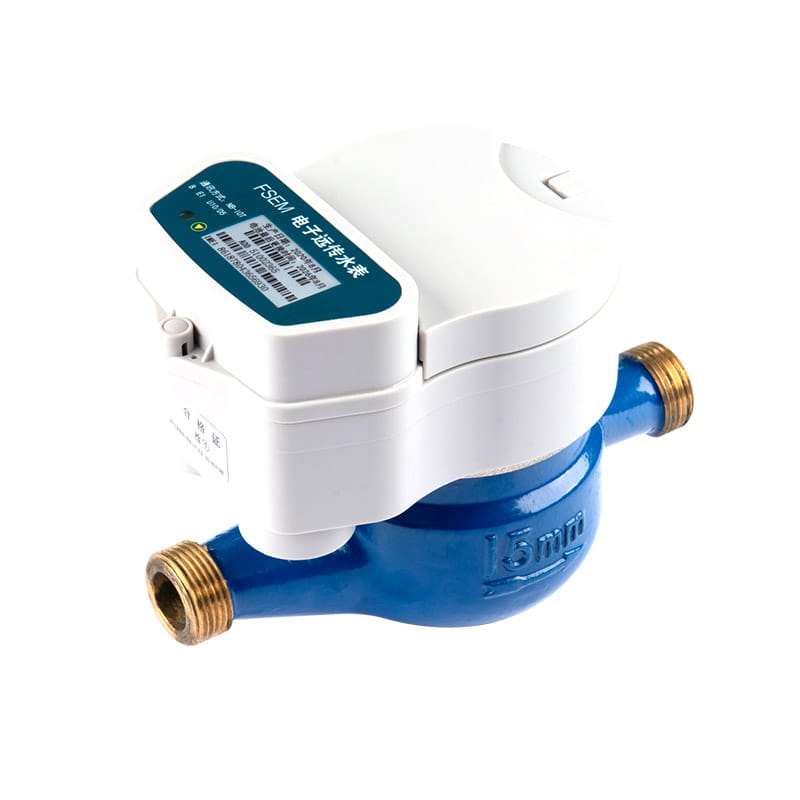
DN identifies the nominal connection size. It does not describe the actual consumption pattern.
Selecting a water meter only because it matches the existing DN can result in poor low-flow coverage or inadequate peak capacity. A stronger selection process uses a real or estimated flow profile.
Step 1: Identify the Minimum Relevant Flow
Determine the smallest recurring flow that the project needs to measure reliably. This may include:
- Overnight residential demand
- Small tenant consumption
- Continuous process water
- Tank refill at a reduced valve opening
- Irrigation-zone minimum demand
- Low-flow leakage or abnormal use
Do not confuse a one-time drip with the lowest commercially relevant flow. Define what the billing, monitoring, or control system must actually capture.
Step 2: Establish Normal Operating Flow
Identify where the system operates for most of its working time. The normal flow should sit comfortably inside the approved measuring range and should not depend on the overload zone.
Where historical information exists, use interval data rather than monthly totals. A monthly volume cannot show whether water was delivered steadily or through short, high-flow events.
Step 3: Confirm the Realistic Peak and Its Duration
A short peak and a sustained peak are different sizing conditions. Record:
- Peak flow
- Expected duration
- Frequency
- Simultaneous user demand
- Pump or valve operating sequence
- Future expansion allowance
Q4 should remain an overload allowance, not the target operating point.
Step 4: Calculate the Required Q1
Once a suitable Q3 is identified, calculate the Q1 delivered by each available R ratio.
For example, if Q3 = 2.5 m³/h:
| R Ratio | Calculated Q1 |
| R100 | 25 L/h |
| R160 | 15.625 L/h |
| R250 | 10 L/h |
| R400 | 6.25 L/h |
This turns an abstract R marking into a project-specific low-flow threshold.
Step 5: Check Pressure Loss and Installation Limits
A meter that covers the flow range must also meet the project’s pressure-loss, pressure, temperature, orientation, connection, and straight-pipe requirements.
For a wider product-selection process, read the ultrasonic water meter selection guide.
Installation Conditions That Can Change the Result
Laboratory accuracy and installed accuracy are not always the same. The latest ISO 4064-5:2025 installation standard covers meter selection, associated fittings, installation, and initial operation.
Important field conditions include the following.
A Completely Full Pipe
Ultrasonic measurement requires a stable acoustic path through the water. Air pockets or partially filled pipes can interrupt the signal and produce unstable measurement.
Choose a location where the measuring tube remains full under all expected operating conditions.
Correct Orientation
A meter may have different approved performance in horizontal and vertical positions. Some certificates and nameplates state separate H and V values.
Do not assume an R400 horizontal rating automatically applies to vertical installation. Verify the approved orientation and corresponding flow ratio.
Flow Disturbance
Elbows, pumps, partially open valves, reducers, and other fittings can distort the velocity profile.
Review the meter’s upstream and downstream flow-profile sensitivity classes, installation manual, and required straight lengths. A generic straight-pipe rule should not replace the model-specific instruction.
Air, Solids, and Water Quality
Air can interfere with ultrasonic signals. Sediment, scale, and suspended solids may affect the measuring channel or long-term stability, depending on the technology and installation.
Confirm whether filtration, air removal, flushing, or a different installation position is required.
Temperature and Pressure
The meter’s temperature class and maximum admissible pressure must match the actual water system. A T30 cold-water meter should not be treated as suitable for a higher-temperature application without approved documentation.
Commissioning Conditions
Before acceptance:
- Flush the pipeline as required.
- Fill it gradually.
- Remove trapped air.
- Confirm the flow direction.
- Check the meter display and units.
- Verify zero-flow behavior.
- Compare a controlled test volume or reference reading.
- Confirm communication and stored data separately from metrological testing.
What Ultrasonic Metering Changes—and What It Does Not
An ultrasonic water meter measures flow electronically without a mechanical impeller in the measuring channel. This can support a wide measuring range, low-flow sensitivity, low pressure loss, bidirectional measurement, and digital communication.
For smaller connections, Dingjia’s ultrasonic water meter covers DN15–DN40. Its published specifications list Q3 values from 2.5 to 16 m³/h and optional R200, R250, and R400 ratios.
For larger network applications, the pipeline network ultrasonic water meter covers DN50–DN300, with multiple Q3 values and optional R200, R250, and R400 configurations.
Ultrasonic technology does not remove the need to verify:
- Accuracy class
- Q1, Q2, Q3, and Q4
- Approved orientation
- Temperature class
- Pressure-loss class
- Flow-profile sensitivity
- Environmental protection
- Type-approval scope
- Test documentation
- Local regulatory acceptance
A measuring principle is not an accuracy certificate. The exact model, configuration, size, firmware, transducer arrangement, and approval documentation must match the product being supplied.
How to Read a Water Meter Datasheet Without Being Misled
A useful datasheet should allow the buyer to reconstruct the complete metrological specification.
Check the Standard and Edition
“Complies with international standards” is too broad for a technical contract. Ask for the exact standard, edition, approval route, and certificate applicable to the destination market.
Read Q3 and R Together
A datasheet that lists only R400 is incomplete for comparison. Q3 is required to calculate Q1.
The minimum acceptable format is:
- Q3 = specified value
- R = specified ratio
- Q1 = Q3/R
- Q2 = specified or calculated value
- Q4 = specified or calculated value
Separate Starting Flow From Q1
Starting flow is the point where the meter begins to register movement. It can be lower than Q1, but that does not mean measurement below Q1 meets the accuracy-class MPE.
If low-flow billing is important, specify Q1. If early leak indication is important, also request starting-flow and alarm-performance data.
Confirm the Accuracy-Class Terminology
Translations such as “Level 2,” “Grade 2,” and “Class 2” may appear in different datasheets. The purchase specification should normalize the wording to the exact terminology of the governing standard.
Verify Orientation-Specific Ratings
Request separate horizontal and vertical ratings if both installation positions will be used. Confirm that the approval covers each orientation.
Review the Actual Test Curve
A single class marking only confirms an error envelope. An error curve provides more useful information about performance across the flow range.
Ask for test points near:
- Q1
- The lower-flow zone
- Q2
- Normal operating flow
- Q3
The current ISO 4064-2:2024 test-method standard addresses type evaluation and initial verification testing. Buyers should request applicable reports rather than relying only on marketing descriptions.
Procurement Checklist for Water Meter Accuracy
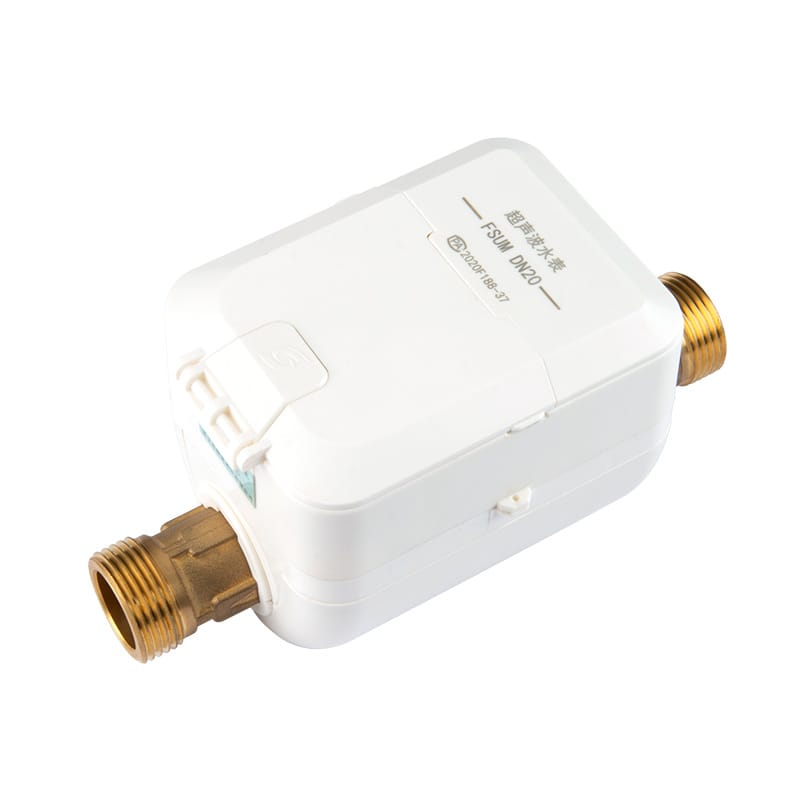
Use this checklist in an RFQ or technical evaluation.
| Item | Information to Request | Why It Matters |
| Application | Residential, commercial, utility, network, or industrial | Defines the operating profile and approval needs |
| Destination market | Country and local acceptance standard | Prevents regulatory mismatch |
| Nominal size | DN and connection type | Confirms physical compatibility |
| Flow profile | Minimum, recurring, normal, sustained peak, short peak | Supports correct Q3 and R selection |
| Accuracy class | Class 1 or Class 2 under the stated standard | Defines the MPE |
| Q values | Q1, Q2, Q3, and Q4 in the same unit | Shows the complete measuring range |
| R ratio | Q3/Q1 | Indicates low-flow range relative to Q3 |
| Starting flow | Separate value and test condition | Prevents confusion with Q1 |
| Orientation | Horizontal, vertical, or both | Confirms installed performance |
| Temperature class | T30 or another approved class | Matches water temperature |
| Pressure | Working and maximum admissible pressure | Protects safety and reliability |
| Pressure loss | Declared pressure-loss class | Supports hydraulic design |
| Flow sensitivity | Upstream and downstream classes | Defines installation requirements |
| Environment | Indoor, outdoor, chamber, humid, or submerged risk | Determines protection requirements |
| Communication | M-Bus, RS485, NB-IoT, LoRa, or required interface | Supports system integration |
| Documentation | Certificate, model scope, test report, accuracy curve | Verifies the offered configuration |
| Pilot test | Sample quantity and field acceptance procedure | Reduces batch-deployment risk |
Dingjia’s complete water meter range includes residential, remote-reading, valve-controlled, photoelectric direct-reading, and pipeline-network options.
For a technically useful model recommendation, provide the project’s DN, minimum and peak flow, required R ratio, accuracy class, installation orientation, communication protocol, destination country, and estimated quantity through the Dingjia contact page.
FAQ
What is the best water meter accuracy class?
There is no universal best class for every project. Class 1 has tighter maximum permissible errors, but the selected meter must also meet local approval rules, flow range, temperature, installation, and application requirements. A properly sized Class 2 meter may be more suitable than an incorrectly selected meter with a higher nominal class.
Is an R400 water meter more accurate than an R160 meter?
Not necessarily. R400 provides a wider Q3-to-Q1 range than R160 when Q3 is the same. It does not, by itself, define a tighter percentage-error limit. Compare accuracy class, Q3, absolute Q1, orientation, and test documentation.
What does Q3 = 4 m³/h and R250 mean?
It means the permanent flow is 4 m³/h and the ratio Q3/Q1 is 250. The calculated Q1 is 0.016 m³/h, or 16 L/h. Under the common standardized relationships, Q2 is 25.6 L/h and Q4 is 5 m³/h. The approved datasheet remains the controlling reference.
Is minimum flow Q1 the same as starting flow?
No. Q1 is the lowest flow covered by the applicable maximum permissible error. Starting flow is the point at which the meter first begins to indicate flow. A meter can start below Q1 without guaranteeing accuracy-class performance below Q1.
Can vertical installation change the R ratio?
It can. The approved flow ratio may depend on orientation. Check the nameplate, certificate, and technical documentation for separate horizontal and vertical ratings.
Does remote reading improve water meter accuracy?
Remote reading does not change the meter’s metrological accuracy class. It improves data availability, reduces manual transcription, and can help identify continuous or abnormal flow patterns. Measurement accuracy still depends on the meter, sizing, installation, and operating conditions.
What information should I send before requesting a water meter quotation?
Provide the application, destination country, DN, connection, minimum flow, normal flow, peak flow, water temperature, working pressure, orientation, accuracy class, R ratio, communication protocol, installation environment, project quantity, and required documentation.
Conclusion
Water meter accuracy classes cannot be evaluated from one marking alone.
The accuracy class defines the permitted error. Q1, Q2, Q3, and Q4 define the flow zones. The R ratio connects Q3 to Q1 and shows how far the specified range extends toward low flow. Starting flow, meanwhile, may indicate sensitivity below Q1 but does not replace a guaranteed metrological limit.
For reliable selection:
- Build a realistic flow profile.
- Select Q3 for normal and sustained demand.
- Calculate the absolute Q1 from Q3 and R.
- Confirm the required accuracy class.
- Verify orientation, temperature, pressure loss, and installation conditions.
- Review certificates, test reports, and accuracy curves for the exact configuration.
- Conduct a field pilot before a large deployment.
A properly sized and documented meter is more valuable than an oversized meter carrying an impressive ratio. If you are evaluating residential or pipeline-network projects, contact Dingjia with your flow range, DN, protocol, destination market, and quantity for technical selection support.