
The most important decision in a remote water meter reading project is not which protocol has the longest advertised range. It is who will own, operate, and troubleshoot the communication path after thousands of meters are installed.
The same water meter can sit inside three very different operating models:
- An NB-IoT meter connects through a mobile operator’s licensed network.
- A LoRaWAN meter reaches a public, private, or hybrid network through one or more gateways.
- A wired M-Bus meter communicates over a two-wire bus to a master or gateway.
All three can deliver reliable readings when the network is designed for the actual site. All three can also disappoint when a buyer selects from a protocol name alone and ignores meter pits, basements, wiring routes, downlink timing, power budgets, backhaul, data ownership, and failure recovery.
This guide compares NB-IoT, LoRaWAN, and wired M-Bus from a utility buyer’s perspective. It explains where each technology fits, what infrastructure it transfers to the buyer, how it affects battery and valve control, and what to prove in a field pilot before bulk deployment.
Table of Contents
Remote Water Meter Reading Decision Snapshot
There is no universal winner. The strongest choice is the one that matches the project’s geography, existing infrastructure, operational capability, and data requirements.
| Decision Factor | NB-IoT | LoRaWAN | Wired M-Bus |
|---|---|---|---|
| Basic network path | Meter → cellular base station → operator network → application | Meter → gateway → IP backhaul → network server → application | Meter → two-wire bus → M-Bus master/gateway → application |
| Local gateway required | Usually no | Yes for a private network; not necessarily when suitable public coverage exists | Yes, an M-Bus master or gateway is required |
| Spectrum or medium | Licensed cellular spectrum | Region-specific unlicensed spectrum | Physical two-wire connection |
| Strongest project geometry | Dispersed meters across an operator-covered territory | Clusters, campuses, communities, rural zones, or areas where the buyer can control gateways | Dense buildings and fixed sites where cabling is practical |
| Network ownership | Primarily operator-managed access network | Public, private, community, or hybrid | Site owner or system integrator |
| Main field dependency | Verified operator coverage and long-term service support | Gateway placement, backhaul, radio planning, and regional parameters | Cable design, bus loading, voltage, addressing, and master capacity |
| Battery relationship | Depends heavily on coverage, attachment, reporting, retries, and power-saving settings | Depends on radio conditions, data rate, airtime, receive windows, retries, and downlinks | The bus may provide device power, depending on the meter design |
| Downlink behavior | Possible, but sleeping devices may only be reachable at configured times | Class A devices normally receive after an uplink; other classes trade more receive availability for more power | The master can poll or send supported commands over the wired bus |
| Typical hidden risk | Assuming a coverage map proves performance inside every chamber | Treating gateway count as a guess instead of an engineered result | Assuming “wired” automatically means interoperable and cloud-ready |
| Best starting question | Is the exact meter location covered on the required band and operator network? | Who will own the gateways, backhaul, network server, keys, and radio plan? | Can the cable route, unit load, voltage budget, and gateway architecture be documented? |
Use this table as a screening tool, not as a final specification. A remote water meter reading network should be selected only after site data and acceptance criteria are defined.
What a Remote Water Meter Reading System Actually Includes
A communication label describes only one part of the system. Reliable remote water meter reading requires an unbroken data path from the metering element to the utility’s billing, monitoring, or customer-management application.
The Metering Layer
The meter measures and stores volume. Its accuracy class, flow range, installation orientation, temperature class, and metrological approval are separate from its communication protocol.
NB-IoT, LoRaWAN, or M-Bus cannot correct an oversized meter, an air-filled pipe, an installation outside the approved orientation, or a metering element operating below its specified range.
The Communication Layer
The communication module packages readings, events, status information, and alarms for transmission. It must also manage time synchronization, retries, acknowledgements, stored records, downlink commands, and power consumption.
“Connected” is therefore not enough. The buyer needs to know exactly what data is sent, how often it is measured, how often it is uploaded, and what happens when the connection is unavailable.
The Network and Backhaul Layer
NB-IoT uses a cellular access network. LoRaWAN uses gateways and an IP connection to a network server. Wired M-Bus uses a master or gateway that may then send data through Ethernet, cellular, fiber, or another backhaul.
This is where responsibility often becomes unclear. A useful contract names the party responsible for coverage, gateway uptime, SIM or device provisioning, backhaul, network-server operation, and fault investigation.
The Application Layer
The application receives, validates, stores, and presents meter data. It may support billing export, district or building analysis, leak alerts, user accounts, valve workflows, APIs, and audit records.
For a broader explanation of these layers, see the existing guide to remote meter reading system architecture. The present article focuses specifically on selecting the communication path.
How NB-IoT Works for Remote Water Meter Reading
NB-IoT is a cellular low-power wide-area technology standardized by the 3rd Generation Partnership Project. A water meter contains a compatible radio module and network credentials, registers on a supported mobile network, and exchanges data through the operator’s infrastructure.
The GSMA overview of NB-IoT highlights power efficiency, capacity, and improved deep-coverage operation as core characteristics. These capabilities make the technology attractive for water meters that send small packets and may be installed across a wide service territory.
Where NB-IoT Is Strong
NB-IoT can remove the need to install and maintain a local radio gateway at each community or site. That is useful when meters are geographically dispersed, when access to shared building infrastructure is limited, or when a utility wants each endpoint to connect through an existing operator network.
Licensed spectrum and operator-managed infrastructure also provide a different operating model from a buyer-owned unlicensed network. The utility does not need to plan every gateway, but it still needs to manage device activation, connectivity agreements, application integration, and field exceptions.
What Buyers Still Need to Verify
A national coverage map is not an acceptance test for a metal meter box, a below-grade chamber, a basement plant room, or a reinforced-concrete building. The exact band, module, antenna, network configuration, operator support, and installation location all affect performance.
Before selecting NB-IoT, verify:
- Supported bands in the destination country
- Operator support at every deployment area
- Signal performance inside representative meter locations
- Provisioning method and device identity management
- Roaming or multi-network requirements, if any
- Data destination and application-layer security
- Power-saving configuration and reporting schedule
- Recovery after an outage or failed registration
- Long-term connectivity responsibility
NB-IoT Is Not Automatically “Always Online”
Battery-powered endpoints conserve energy by sleeping. Power Saving Mode and extended discontinuous reception can reduce consumption, but they also influence when the device is reachable.
This distinction matters when the system includes remote valve commands. A platform may accept a command immediately while the meter retrieves and executes it only during an allowed communication window. The project specification must define end-to-end command latency rather than merely stating “two-way communication.”
How LoRaWAN Works for Remote Water Meter Reading
LoRaWAN is a low-power wide-area networking standard for battery-operated devices. The LoRa Alliance’s official overview explains that the architecture includes end devices, gateways, network servers, and application servers, and that deployments may use public, private, community, or hybrid networks.
A meter sends a radio packet that can be received by one or more gateways. Those gateways forward the packet over IP backhaul to a network server, which handles network functions before data reaches the application.
LoRa Is Not the Same as LoRaWAN
LoRa refers to the radio physical layer. LoRaWAN defines the network protocol and architecture above it.
An RFQ that says only “LoRa water meter” is incomplete. Buyers should request the LoRaWAN version, regional parameter plan, device class, activation method, security implementation, payload specification, certification status, network-server compatibility, and gateway requirements.
Why Network Ownership Matters
LoRaWAN gives a project more choices over who owns the network. A utility may use available public coverage, build a private network, or combine both.
Private ownership can provide control over gateway placement, data routing, and coverage expansion. It also transfers responsibility for gateway power, backhaul, mounting, antennas, server operation, monitoring, firmware, spare units, and troubleshooting to the utility or its integration partner.
Device Class Changes Downlink Behavior
The official LoRaWAN L2 1.0.4 specification is optimized for battery-powered end devices. All LoRaWAN endpoints support Class A behavior, in which receive windows follow an uplink. This is energy-efficient but means the server cannot assume an arbitrary downlink will reach a sleeping meter immediately.
Class B adds scheduled receive opportunities. Class C keeps the receiver available for much longer, but its power demand is generally unsuitable for an endpoint expected to operate for years on a sealed battery unless the overall power design supports it.
For meter reading, Class A is often the practical baseline. For valve control, the project must align command timing, reporting intervals, retries, and user expectations with the actual class and firmware behavior.
Where LoRaWAN Fits Well
LoRaWAN is especially useful when meters are clustered and a utility can engineer gateway coverage, or when an area lacks suitable cellular service but offers good locations for gateway power and backhaul. It can also suit campuses, residential communities, rural supply zones, industrial parks, and private infrastructure where network control is a strategic requirement.
The unlicensed band is region-specific and subject to local radio rules. A meter configured for one regional plan should not be assumed suitable for another market.
How Wired M-Bus Works for Remote Water Meter Reading
M-Bus is a communication system developed for meters. Wired M-Bus uses a two-wire bus that connects meter endpoints to a master. The master requests data, manages the bus, and can pass records to a local or remote application through a gateway.
The Open Metering System specification library maps wired M-Bus to EN 13757-2, EN 13757-3, and EN 13757-7 and provides additional implementation guidance intended to improve interoperability.
Why Wired M-Bus Remains Relevant
Radio is not automatically better in every building. When cable routes are available, wired M-Bus can offer a controlled communication medium without dependence on indoor radio coverage or an external cellular operator.
It is well suited to new multi-unit buildings, centralized plant rooms, commercial properties, and fixed sites where meters can be connected during construction or renovation. Depending on the device design, the bus may also supply power to connected slaves.
M-Bus Still Requires Engineering
A reliable wired network requires more than connecting two conductors. The designer must consider:
- Number of unit loads
- Master capacity
- Cable type and total length
- Voltage drop at the farthest device
- Network topology
- Baud rate
- Primary and secondary addressing
- Segmentation and repeaters
- Surge and electrical protection
- Gateway and backhaul
- Commissioning and fault-location tools
The OMS technical guidance exists partly because standards can leave implementation choices that affect interoperability. A claim of “M-Bus compatible” should therefore be supported by tested datagrams, addressing behavior, master compatibility, and a complete point list.
Wired M-Bus and Wireless M-Bus Are Different
Wired M-Bus is addressed in EN 13757-2, while Wireless M-Bus has its radio layer in EN 13757-4. They may share application concepts, but one should not be substituted for the other in a tender.
If a supplier offers “M-Bus,” the RFQ should explicitly state wired or wireless, the applicable standard parts, the required security profile, and the gateway interface.
Compare the Technologies by Project Responsibility
Protocol comparisons often emphasize range and battery life because those values are easy to market. Project responsibility is a more useful B2B comparison because it determines who must solve problems over the life of the system.
| Responsibility | NB-IoT | LoRaWAN | Wired M-Bus |
| Access-network coverage | Mobile operator, with buyer verification at meter locations | Utility, network provider, or integrator depending on network model | Building or site designer through cabling |
| Endpoint provisioning | Cellular credentials plus platform registration | Device keys, activation, network-server and application registration | Bus addressing, point mapping, and gateway registration |
| Local infrastructure | Usually minimal | Gateways, antennas, power, and backhaul for private networks | Cable, master, segmentation, power design, and gateway |
| Network monitoring | Operator visibility may be limited to contracted tools and reports | Buyer can obtain detailed private-network visibility if designed into the platform | Buyer can monitor master, bus, and gateway directly |
| Expansion | Depends on network coverage and service availability | Add or relocate gateways and capacity as required | Extend the bus within electrical and topology limits |
| Geographic transfer | Requires compatible bands, operator support, and provisioning | Requires the correct regional plan and a suitable network | Requires a designed physical connection at each site |
| Main organizational skill | Connectivity and supplier management | RF planning plus gateway and server operations | Low-voltage design, commissioning, and gateway integration |
This table reveals why the same utility may legitimately choose different protocols for different asset groups.
Select by Site Geometry, Not by Headline Range
The actual signal path is more important than a theoretical distance. Water meters are commonly installed in locations that are unfavorable to radio: below ground, behind metal lids, beside pipes, inside service shafts, or beneath reinforced concrete.
Scattered Urban or Regional Meters
NB-IoT is often a strong candidate when meters are distributed across a broad area and supported cellular service is present at the endpoints. It avoids placing a buyer-owned gateway near every small cluster.
The pilot must still include the weakest predicted locations. Test from inside the closed chamber or cabinet, not with the meter temporarily placed at ground level.
Dense Apartment or Commercial Buildings
Wired M-Bus can be attractive where risers, utility rooms, and cable routes are available. Its predictable physical path can be easier to document than radio propagation through multiple floors.
LoRaWAN may also work, but gateway placement should be proven across basement rooms, shafts, and apartments rather than estimated from floor area.
Private Campuses and Residential Communities
LoRaWAN can suit a campus or community where the owner can install gateways at elevated, powered locations with reliable backhaul. Private operation offers network control, but the site owner must maintain that infrastructure.
M-Bus may serve meters inside individual buildings while LoRaWAN or another backhaul links building gateways to a central platform.
Rural Clusters
A private LoRaWAN network may cover clustered rural assets when good gateway sites are available. NB-IoT can be simpler where compatible operator coverage already reaches the meter locations.
The decision should be based on field readings, backhaul availability, maintenance access, and ownership—not on urban or rural labels alone.
Deep Chambers and Difficult Basements
No wireless technology should be accepted from a brochure claim in this environment. Compare antenna configuration, radio metrics, packet success, reconnection behavior, and energy use in representative chambers.
If neither wireless path is stable, a wired segment, relocated gateway, external antenna arrangement approved for the device, or hybrid architecture may be more reliable.
Downlink and Valve Control Change the Decision
Periodic uplink meter reading is simpler than dependable remote actuation. A valve command is not complete when the platform displays “sent.” It is complete only when the intended device receives, authenticates, executes, verifies, and reports the result.
Define the Full Command Lifecycle
A safe workflow should record:
- Who authorized the action
- Which meter and account were targeted
- When the command was queued
- When the endpoint received it
- Whether the valve attempted to move
- The final valve position or fault state
- Retries, timeouts, and escalation
- Any manual override or later reconciliation
Compare Practical Downlink Behavior
| Question | NB-IoT | LoRaWAN Class A | Wired M-Bus |
| Can the endpoint sleep? | Yes | Yes | Communication may be bus-powered; implementation varies |
| When can a command reach it? | According to network availability and the device’s reachable windows | Normally during receive windows after an uplink | When the master polls or addresses a supported device |
| What can delay execution? | Registration, poor coverage, sleep settings, network or application queues | Next uplink, duty-cycle limits, gateway/backhaul availability, retries | Bus congestion, addressing errors, gateway logic, device response |
| What must be logged? | Queue, delivery, device acknowledgement, action result | Queue, receive-window attempt, acknowledgement, action result | Master request, slave response, action result |
For projects that require remote shutoff or account control, consider Dingjia’s NB-IoT valve-controlled water meter. Its communication and valve functions should still be evaluated against the project’s required command timing, authorization rules, fail-safe behavior, and acceptance test.
Battery Life Is an Operating Result, Not a Fixed Label
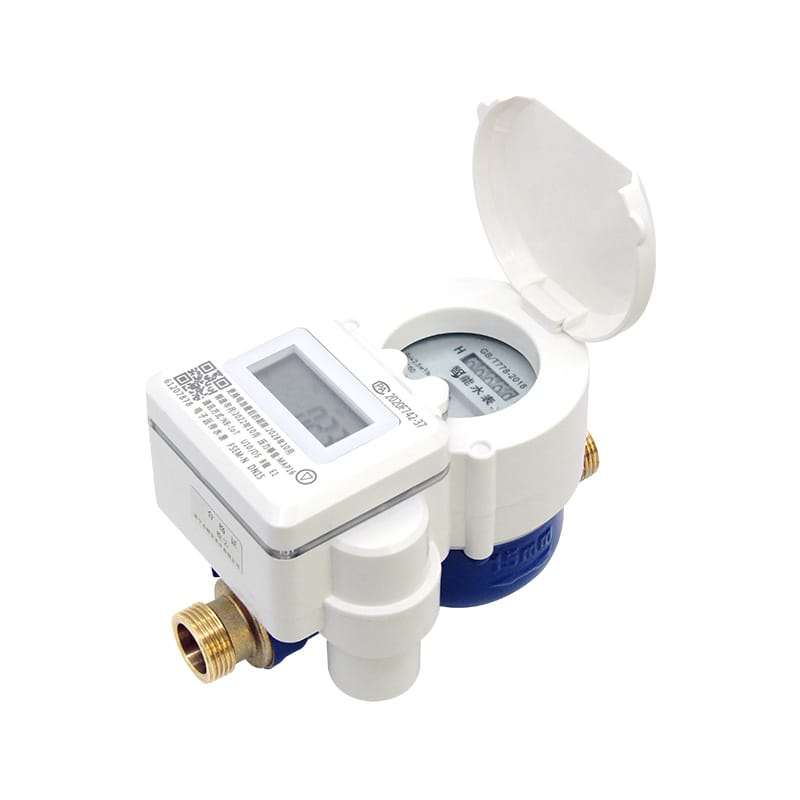
Battery life cannot be judged from battery capacity or a headline number alone. The useful question is whether the complete device can meet its service-life target under the project’s worst credible communication conditions.
A simplified daily energy budget includes:
Metering and standby + scheduled transmissions + receive windows + network registration + retries + local display and sensing + alarms + valve operations + storage loss and self-discharge
Conditions That Increase Consumption
- Weak or unstable radio coverage
- Repeated network attachment
- Frequent upload sessions
- Large or fragmented payloads
- Confirmed messages and repeated acknowledgements
- Frequent downlink checks
- Alarm bursts
- Clock synchronization
- Firmware or configuration updates
- Low-temperature operation
- Valve motor use
- Long commissioning sessions
NB-IoT consumption is strongly affected by coverage and cellular session behavior. LoRaWAN consumption depends on data rate, airtime, receive windows, retransmissions, and gateway availability. Wired M-Bus may reduce reliance on an endpoint battery when the selected meter can be powered from the bus, but the complete product and backup design still need verification.
What to Request From a Supplier
Ask for the battery-life calculation assumptions, not only the result:
- Reporting and measurement intervals
- Expected signal or coverage condition
- Number of retries
- Confirmed versus unconfirmed transmissions
- Downlink frequency
- Alarm allowance
- Valve-operation allowance
- Operating-temperature profile
- Battery end-of-life threshold
- Self-discharge and storage period
- Safety margin
A field pilot should record communication energy or battery indicators under real conditions. An office demonstration beside a gateway or strong cellular signal does not represent a buried deployment.
Reporting Frequency Is Not the Same as Measurement Interval
A meter may measure or store data every hour but upload one batch per day. Another system may upload every interval. Both can provide hourly records, but they have different power use, event latency, network load, and data-loss exposure.
Define at least four separate settings:
- Measurement interval: how often the meter creates a reading
- Storage interval: how often a timestamped record is written locally
- Upload interval: how often records are sent to the platform
- Alarm latency: how quickly a qualifying event should be reported
Also define offline behavior. A robust remote water meter reading system should retain a specified number of records, preserve timestamps, identify missing intervals, and backfill stored data after reconnection without creating duplicates.
For leak or continuous-flow analysis, a daily cumulative total may be insufficient even when daily communication succeeds. Buyers should specify the interval data and event fields required by the intended analytics.
Cybersecurity and Data Ownership Must Be Specified End to End
Licensed spectrum, unlicensed spectrum, and a physical cable have different threat models, but none makes the full system secure automatically. Security must cover the meter, communication module, credentials, gateway, network or master, application, APIs, administrator accounts, and update process.
The NIST IoT Device Cybersecurity Capability Core Baseline gives buyers a useful starting framework: device identification, authorized configuration, data protection, restricted interface access, secure software update, and cybersecurity-state awareness.
Minimum Questions for an RFQ
- Does every endpoint have a unique identity?
- Are factory-default shared credentials prohibited?
- How are keys created, injected, stored, rotated, revoked, and recovered?
- Is data protected in transit and at rest?
- Which party can issue valve or configuration commands?
- Are roles and permissions separated?
- Does every administrative and valve action create an audit record?
- How are firmware images authenticated?
- Can updates resume safely after interruption?
- What happens when a device is transferred, replaced, or decommissioned?
- Can the buyer export raw readings, alarms, and audit logs?
- Who owns the device registry, network configuration, and historical data?
- What is the vulnerability-response and security-support period?
Protocol Security Does Not Replace Application Security
NB-IoT benefits from cellular network security, but the application path and device credentials still need protection. LoRaWAN includes network and application security mechanisms, but key handling and server configuration determine whether they are used correctly.
A wired M-Bus cable reduces exposure to over-the-air interception, yet an insecure gateway, flat building network, shared administrator account, or unprotected API can still compromise the system.
A Field Pilot Should Test Failure, Not Just Success
A strong pilot is designed around the most difficult locations and operating states. It should prove not only that a reading can arrive, but that the system remains usable when coverage weakens, backhaul fails, a gateway restarts, records queue, or a valve command is delayed.
Build a Representative Sample
Include:
- Best, typical, and worst predicted signal locations
- Metal and non-metal enclosures
- Ground-level and below-grade chambers
- Basements and reinforced-concrete spaces
- Different building types and geographic clusters
- Representative meter sizes and firmware
- Valve-controlled endpoints, if part of the project
- The intended production server and integration path
Define Acceptance Metrics Before Installation
| Metric | What It Should Prove |
| Scheduled read success | Expected records arrive within the agreed reporting window |
| Data completeness | Every required interval is present or explicitly marked |
| Timestamp accuracy | Records align with the required time source and time zone |
| Reconnection | The device recovers after planned and unplanned outages |
| Backfill | Stored readings upload in order without loss or duplication |
| Downlink result | Commands reach the correct device and return a verified outcome |
| Radio or bus health | The platform exposes enough diagnostics for fault isolation |
| Gateway or master uptime | Local infrastructure is monitored and failures create alerts |
| Energy behavior | Real communication conditions remain consistent with the power budget |
| Data reconciliation | Meter display, local memory, platform, and export agree |
| API performance | Downstream systems receive complete, correctly mapped records |
| Security logging | Provisioning, configuration, access, updates, and valve actions are auditable |
The buyer should set project-specific thresholds and observation periods. Do not copy a generic percentage into the tender without considering billing cycles, service obligations, and the consequence of missing data.
Include Recovery Tests
Deliberately interrupt backhaul, power-cycle a gateway or master, block a scheduled upload, restore service, and verify record backfill. Test rejected and expired valve commands. Replace a device and confirm that the old identity cannot continue communicating.
These tests reveal more about long-term operability than a one-time successful reading.
Hybrid Architecture Can Be Better Than One Protocol Everywhere
Large projects often contain several physical environments. Forcing every meter onto one communication method may increase risk rather than simplify operations.
A mixed architecture could use:
- Wired M-Bus inside new apartment buildings
- A gateway with secure IP or cellular backhaul from each building
- LoRaWAN for meters distributed across a private campus
- NB-IoT for isolated or geographically scattered endpoints
This does not mean accepting uncontrolled fragmentation. The application should normalize meter identity, units, timestamps, quality flags, alarms, and audit records so operators can manage all endpoints consistently.
The key architectural distinction is between the local meter interface and the wide-area backhaul. An M-Bus meter does not need to remain “wired all the way to the cloud”; its gateway can use another secure backhaul. Similarly, a LoRaWAN gateway still requires a reliable IP path.
Match the Protocol to the Available Meter Configuration
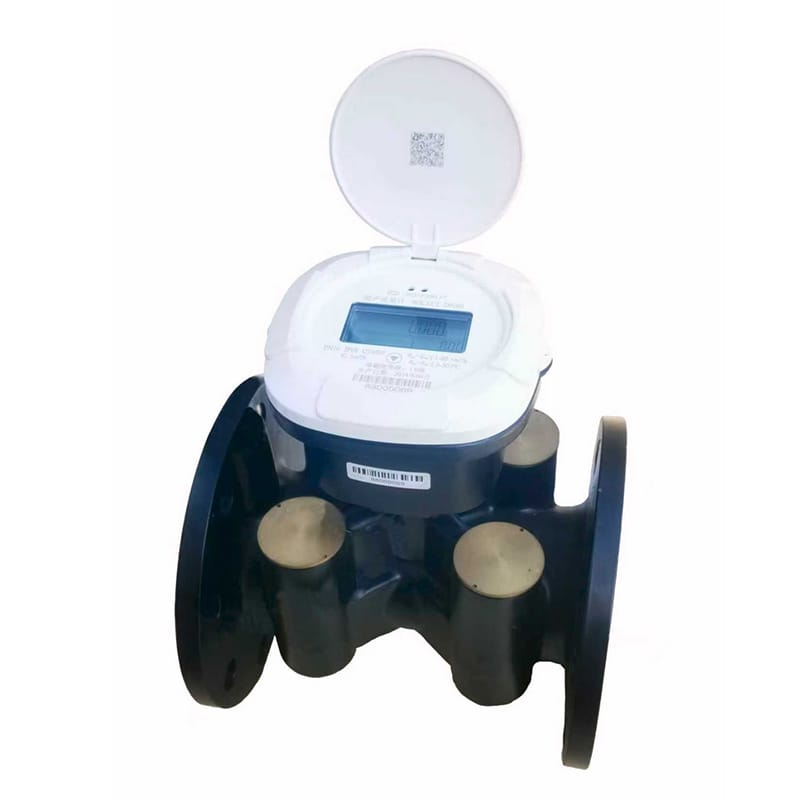
Dingjia’s water meter product range includes electronic remote, valve-controlled, direct-reading, ultrasonic, and pipeline-network options for different project requirements.
NB-IoT Without a Local Concentrator
The electronic remote water meter uses NB-IoT for remote transmission and is intended for deployments where direct cellular connectivity is preferred over a local concentrator.
Model selection should still confirm the destination network, supported bands, signal conditions, upload schedule, data format, platform integration, and required documentation.
NB-IoT With Remote Valve Management
The remote valve-controlled water meter combines NB-IoT communication with valve control. Buyers should add command authorization, acknowledgement, timeout, local override, fault reporting, and valve-cycle testing to the standard reading pilot.
M-Bus or RS485 for Wired Collection
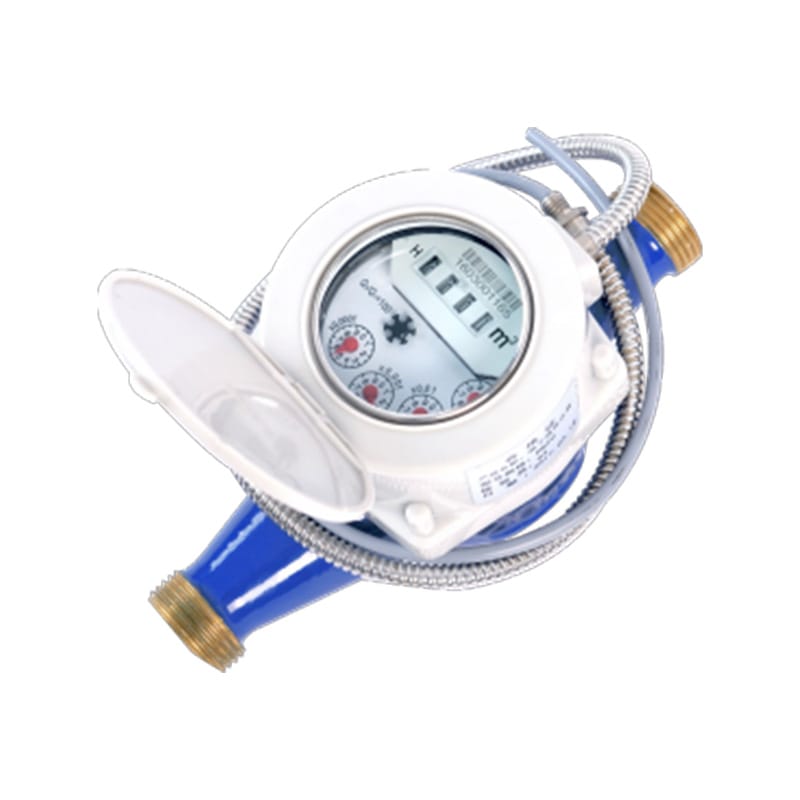
The photoelectric direct-reading remote water meter offers M-Bus or RS485 communication for projects that favor wired collection. The RFQ should identify the exact interface, master or gateway, addressing method, point map, cable design, and integration protocol.
Confirm LoRaWAN at Configuration Level
If LoRaWAN is required, do not accept a generic “LoRa” statement. Request the exact meter configuration, LoRaWAN version, regional plan, device class, activation method, certification status, payload codec, gateway and server compatibility, security process, and field-pilot evidence.
Remote Water Meter Reading RFQ Checklist
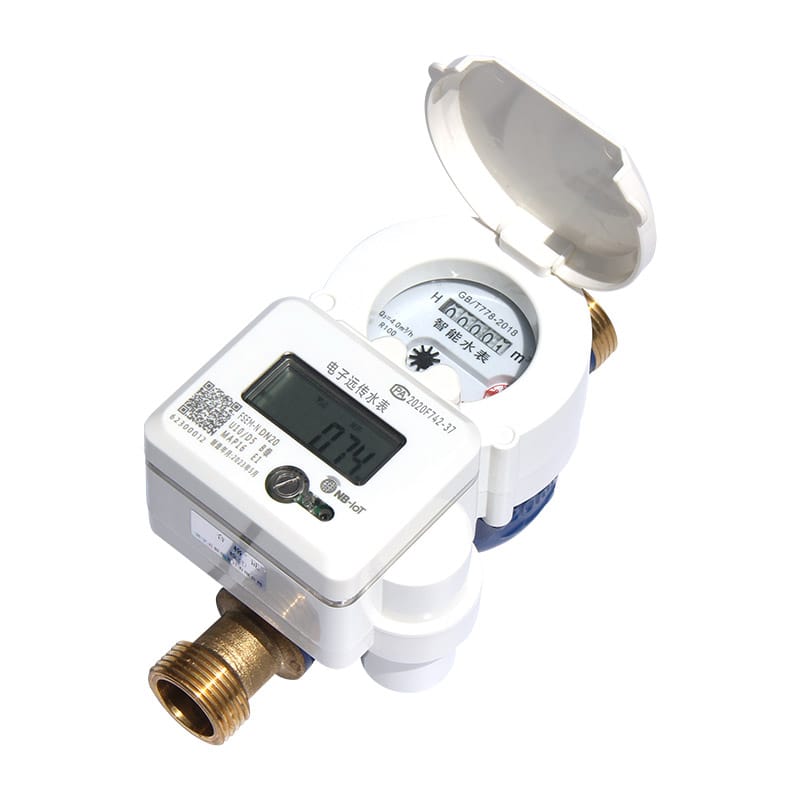
Use the following checklist to turn a protocol preference into a testable procurement specification.
| RFQ Item | Information to Specify | Evidence to Request |
| Application | Billing, monitoring, leak analysis, prepaid control, district metering, or another use | Functional workflow and point list |
| Deployment map | Country, city, building type, meter position, chamber material, and asset density | Site survey and representative photographs |
| Meter specification | DN, Q1–Q4, R ratio, accuracy class, pressure, temperature, orientation, and protection | Datasheet, approval scope, and test documents |
| Communication option | NB-IoT, LoRaWAN, wired M-Bus, or approved hybrid | Exact module/interface and architecture |
| Regional compatibility | Cellular bands, LoRaWAN regional plan, or M-Bus standard parts | Module data, certification, and configuration record |
| Network ownership | Operator, buyer, integrator, or shared responsibility | Responsibility matrix and support process |
| Local infrastructure | Gateway, antenna, master, cable, power, enclosure, and backhaul | Network and wiring design |
| Data schedule | Measurement, storage, upload, alarm, and time-sync intervals | Configurable parameter list |
| Offline storage | Record capacity, retention behavior, and backfill logic | Recovery-test procedure |
| Payload and point map | Units, timestamps, totals, interval values, status, battery, signal, tamper, leak, and valve fields | Payload specification and sample data |
| Downlink | Command types, reachable windows, acknowledgement, timeout, retries, and expiry | End-to-end command sequence |
| Security | Identity, credentials, encryption, access control, audit, updates, and decommissioning | Security architecture and lifecycle policy |
| Data integration | API, file export, billing interface, ownership, retention, and portability | API documentation and sample export |
| Commissioning | Activation, addressing, signal or bus tests, replacement, and troubleshooting | Tools, manuals, and training plan |
| Pilot | Sample design, difficult locations, observation period, and acceptance thresholds | Signed pilot protocol and report template |
| Production acceptance | Batch sampling, firmware baseline, configuration control, and data reconciliation | Factory and site acceptance plans |
| Lifecycle support | Firmware, security response, network changes, spares, and technical support | Documented support responsibilities |
For a model and communication review, send the project map, DN range, quantity, meter locations, destination country, required protocol, reporting interval, valve functions, and platform requirements through the Dingjia contact page.
FAQ
Is NB-IoT better than LoRaWAN for remote water meter reading?
Not in every project. NB-IoT is often attractive for dispersed meters where supported cellular coverage removes the need for local gateways. LoRaWAN can be stronger when the utility wants a private or hybrid network and can engineer gateway placement, backhaul, and operations. Compare real endpoint coverage, ownership, downlink needs, power assumptions, and lifecycle responsibility.
Can NB-IoT work in an underground water meter pit?
It may, but a general coverage claim cannot prove a specific pit. The lid, depth, surrounding soil, antenna, frequency band, local base-station conditions, and installation orientation can all affect performance. Test representative closed pits using the production module, antenna, SIM or credentials, firmware, and server.
Does LoRaWAN require a gateway?
The architecture uses gateways. A buyer building a private network must deploy and maintain them. When suitable public or managed network coverage exists, the buyer may not need to own the gateway, but coverage, service responsibility, and data routing still need contractual verification.
Is M-Bus the same as Wireless M-Bus?
No. Wired M-Bus uses a two-wire physical connection and is covered by EN 13757-2 at the physical and link layers. Wireless M-Bus uses a radio layer addressed in EN 13757-4. A tender should identify the exact variant and applicable standard parts.
Which protocol is best for a valve-controlled water meter?
The best protocol is the one that can meet the required command latency, acknowledgement, security, fail-safe, and audit workflow under actual field conditions. NB-IoT and LoRaWAN battery devices may sleep, while wired M-Bus behavior depends on the master, device, and command implementation. Test the full command lifecycle, not only a platform button.
Does remote reading improve water meter accuracy?
No. Communication reduces manual collection and can provide more frequent data, but it does not change the meter’s metrological accuracy. Meter sizing, flow range, accuracy class, installation, water conditions, and verification remain separate requirements.
Can one project combine NB-IoT, LoRaWAN, and M-Bus?
Yes. A hybrid design can match each protocol to the physical environment while presenting normalized data in one platform. The project should standardize endpoint identity, units, timestamps, alarms, security, APIs, and operating procedures to avoid creating disconnected silos.
What is the most important remote water meter reading pilot metric?
No single metric is sufficient. At minimum, evaluate scheduled data completeness, age of the latest reading, timestamp integrity, recovery and backfill, diagnostic visibility, energy behavior, and—when applicable—verified valve-command outcomes.
What should I send a supplier before requesting a recommendation?
Provide the destination country, project map, meter quantity, DN and flow range, installation photographs, chamber or building conditions, available wiring and power, reporting interval, alarm requirements, valve functions, platform or API needs, security requirements, and target pilot schedule.
Conclusion
NB-IoT, LoRaWAN, and wired M-Bus represent three different ways to assign network responsibility.
NB-IoT can simplify wide-area deployments by using an operator’s cellular infrastructure, but endpoint coverage, provisioning, reachability, and service continuity must be proven. LoRaWAN offers flexible public, private, or hybrid network ownership, but gateways, backhaul, regional parameters, capacity, and server operations become part of the design. Wired M-Bus provides a controlled physical communication path for dense fixed sites, but cable engineering, master capacity, datagram compatibility, and gateway integration remain essential.