Table of Contents
BMS integration succeeds when the correct M-Bus records are mapped with identity, units and timestamps鈥攏ot when a gateway merely reports numbers. For M-Bus heat meter integration, begin with “Document Topology and Master Capacity” and then “Use Stable Device Identification.” Together, “Document Topology and Master Capacity” and “Use Stable Device Identification” define the M-Bus heat meter integration evidence needed before “Select the Required Telegram Records.”
After “Select the Required Telegram Records,” the M-Bus heat meter integration workflow continues to “Preserve Units and Multipliers” and ends at “Deliver a Maintainable Point Schedule.” The move from “Select the Required Telegram Records” to “Deliver a Maintainable Point Schedule” explains the M-Bus heat meter integration logic behind this H1.
Document Topology and Master Capacity
Count unit loads, cable length and branches, then confirm the master can supply the network. Keep an allowance for planned devices. A plausible “Document Topology and Master Capacity” result can hide a M-Bus heat meter integration error. Store “Document Topology and Master Capacity” limits, test conditions and exception ownership.
- Verify count unit loads.
- Document cable length and branches.
- Compare then confirm the master can supply the network.
- Confirm keep an allowance for planned devices.
Use Stable Device Identification
Record manufacturer ID, serial number, primary address and secondary address. Link them to the BMS equipment name and physical location. Share “Use Stable Device Identification” evidence with the M-Bus heat meter integration stakeholders. If “Use Stable Device Identification” misses its basis, revise the “Use Stable Device Identification” selection and record why.
- Verify record manufacturer ID.
- Document primary address and secondary address.
- Compare link them to the BMS equipment name and physical location.
Select the Required Telegram Records
Map energy, volume, power, flow, supply temperature, return temperature, temperature difference and status only when operationally useful. Give “Select the Required Telegram Records” a dedicated M-Bus heat meter integration acceptance test. Preserve “Select the Required Telegram Records” values and diagnostics for a repeatable “Select the Required Telegram Records” check.
- Verify supply temperature.
- Document return temperature.
- Compare temperature difference and status only when operationally useful.
Preserve Units and Multipliers
Decode each data record鈥檚 value information before applying BMS scaling. Test large totals and decimal values, not only zeros. Treat “Preserve Units and Multipliers” as a complete M-Bus heat meter integration decision. Recheck “Preserve Units and Multipliers” against M-Bus heat meter integration pipework, controls, interfaces and service access.
- Verify decode each data record鈥檚 value information before applying BMS scaling.
- Document test large totals and decimal values.
Set a Sensible Polling Interval
Match update rate to monitoring needs and bus capacity. Energy totals rarely require the same frequency as a control signal. Change one “Set a Sensible Polling Interval” variable at a time during M-Bus heat meter integration diagnosis. The “Set a Sensible Polling Interval” baseline separates “Set a Sensible Polling Interval” hardware, process and installation causes.
- Verify match update rate to monitoring needs and bus capacity.
- Document energy totals rarely require the same frequency as a control signal.
Handle Stale and Missing Values
Carry timestamp and communication quality into the BMS. A stale last value must not appear as a fresh measurement. Close “Handle Stale and Missing Values” with a named M-Bus heat meter integration owner. For “Handle Stale and Missing Values,” keep its photographs, configuration export and “Handle Stale and Missing Values” comparison readings.
- Verify carry timestamp and communication quality into the BMS.
- Document a stale last value must not appear as a fresh measurement.
Compare End to End
Read the local display, master telegram, gateway register and BMS point within a controlled interval. Locate scaling or mapping differences at the first point of divergence. For “Compare End to End,” the M-Bus heat meter integration team ties assumptions to field evidence. Its “Compare End to End” record names the source, unit and “Compare End to End” exception owner.
- Verify read the local display.
- Document gateway register and BMS point within a controlled interval.
- Compare locate scaling or mapping differences at the first point of divergence.
Deliver a Maintainable Point Schedule
Include device identities, addresses, records, units, scaling, poll rate, alarms and screenshots. This prevents future remapping by guesswork. Use drawings and measurements to complete “Deliver a Maintainable Point Schedule” in M-Bus heat meter integration. A written “Deliver a Maintainable Point Schedule” decision keeps installation and operations aligned.
- Verify include device identities.
- Document alarms and screenshots.
- Compare this prevents future remapping by guesswork.
Document Topology and Master Capacity Decision Table
| Decision | Evidence | Release condition |
|---|---|---|
| Document Topology and Master Capacity | Count unit loads, cable length and branches, then confirm the master can supply the network | Release “Document Topology and Master Capacity” only after its M-Bus heat meter integration evidence is accepted |
| Use Stable Device Identification | Record manufacturer ID, serial number, primary address and secondary address | Release “Use Stable Device Identification” only after its M-Bus heat meter integration evidence is accepted |
| Select the Required Telegram Records | Map energy, volume, power, flow, supply temperature, return temperature, temperature difference and status only when operationally useful | Release “Select the Required Telegram Records” only after its M-Bus heat meter integration evidence is accepted |
| Preserve Units and Multipliers | Decode each data record鈥檚 value information before applying BMS scaling | Release “Preserve Units and Multipliers” only after its M-Bus heat meter integration evidence is accepted |
| Set a Sensible Polling Interval | Match update rate to monitoring needs and bus capacity | Release “Set a Sensible Polling Interval” only after its M-Bus heat meter integration evidence is accepted |
Five Questions About “Deliver a Maintainable Point Schedule”
Which “Document Topology and Master Capacity” check comes first for M-Bus heat meter integration?
Count unit loads, cable length and branches, then confirm the master can supply the network. Keep an allowance for planned devices.
Why does use stable device identification affect M-Bus heat meter integration?
Record manufacturer ID, serial number, primary address and secondary address. Link them to the BMS equipment name and physical location.
How should compare end to end be verified?
Read the local display, master telegram, gateway register and BMS point within a controlled interval. Locate scaling or mapping differences at the first point of divergence.
When must the M-Bus heat meter integration basis be reviewed?
Review M-Bus heat meter integration when inputs to “Document Topology and Master Capacity,” “Preserve Units and Multipliers” or “Compare End to End” change.
Which details support “Use Stable Device Identification” in M-Bus heat meter integration?
For M-Bus heat meter integration, provide the inputs for “Document Topology and Master Capacity,” the constraints from “Use Stable Device Identification” and the evidence expected under “Compare End to End.”
Before approving “Document Topology and Master Capacity,” revisit its project assumptions. Count unit loads, cable length and branches, then confirm the master can supply the network. Keep an allowance for planned devices. Record the resulting “Document Topology and Master Capacity” decision and any site-specific “Document Topology and Master Capacity” exception.
Before approving “Use Stable Device Identification,” revisit its project assumptions. Record manufacturer ID, serial number, primary address and secondary address. Link them to the BMS equipment name and physical location. Record the resulting “Use Stable Device Identification” decision and any site-specific “Use Stable Device Identification” exception.
Before approving “Select the Required Telegram Records,” revisit its project assumptions. Map energy, volume, power, flow, supply temperature, return temperature, temperature difference and status only when operationally useful. Record the resulting “Select the Required Telegram Records” decision and any site-specific “Select the Required Telegram Records” exception.
Technical references for “Document Topology and Master Capacity” include CEN-CENELEC for “Document Topology and Master Capacity”, ISO 50001 for “Use Stable Device Identification”, OIML R 75 for “Select the Required Telegram Records”, EU Measuring Instruments Directive for “Preserve Units and Multipliers”. The project specification should name the applicable edition and local rules.
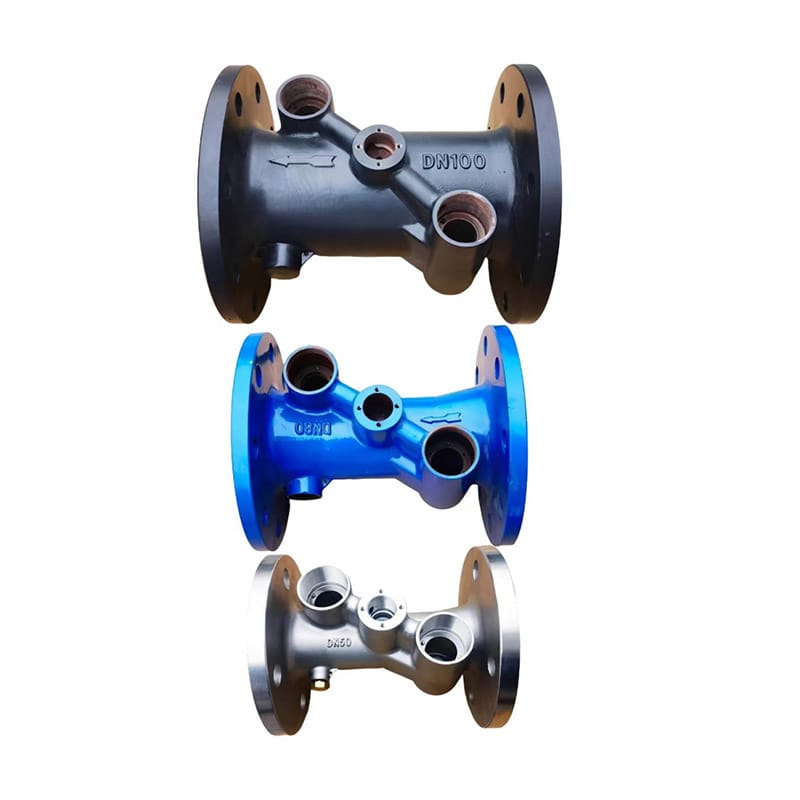
Dingjia options supporting “Use Stable Device Identification” include the matched temperature sensors for “Document Topology and Master Capacity”, heat-meter base pipe for “Use Stable Device Identification”, household heat meter for “Select the Required Telegram Records”, pipeline heat meter for “Preserve Units and Multipliers”. For “Use Stable Device Identification,” send operating conditions and interface requirements to the engineering team before selection. The inquiry should also assign responsibility for “Set a Sensible Polling Interval” and “Handle Stale and Missing Values.”